
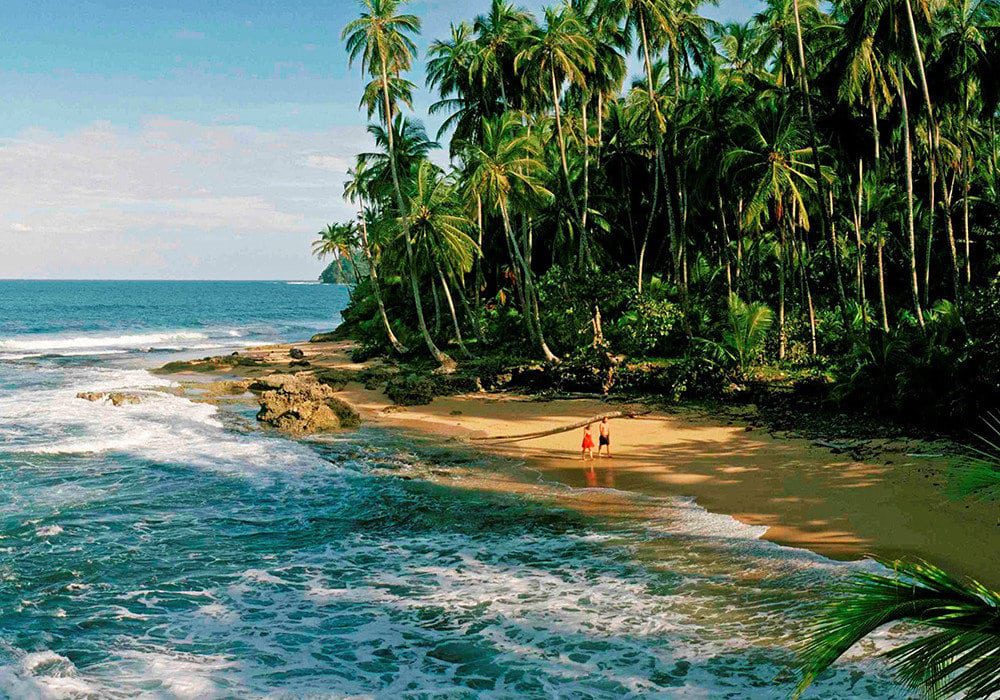
Costa Rica fits both coasts into a country roughly the size of West Virginia, separated by a volcanic mountain spine that splits the weather, the culture, and the entire travel experience in two.
The Pacific coast is more developed, more predictable, and draws the majority of international visitors. The Caribbean coast is less infrastructure-heavy, more culturally distinct, and runs on its own weather clock that catches most travelers off guard. Neither side is necessarily better, but the right one depends entirely on when you’re going, what you want to do, and how much logistical friction you’re willing to absorb.
This guide covers every meaningful difference between the two coasts so you can make the call before you land rather than after you’ve driven four hours in the wrong direction.
Head-to-Head: Pacific Coast vs. Caribbean Coast in Costa Rica
| Category | Pacific Coast | Caribbean Coast |
| Best for | Families, first-timers, surf, dry-season beach holidays | Wildlife watching, Afro-Caribbean culture, budget travelers, October visitors |
| Weather pattern | Clear dry season Dec-Apr; rainy May-Nov | Rainy most of the year; driest Sept-Oct (opposite of Pacific) |
| Beach water clarity | Varies; generally murkier in rainy season | Calm, turquoise water in dry stretches, particularly Cahuita |
| Infrastructure | Well-developed; paved roads, restaurants, tour operators everywhere | Less developed; some areas require 4WD; fewer luxury options |
| Cost | Higher across accommodations, food, and activities | Generally lower; fewer luxury properties drive down average spend |
| Main airports | Liberia (LIR) for Guanacaste; San José (SJO) for Central Pacific | San José (SJO); add 3-4 hour drive to reach Caribbean towns |
| Wildlife highlights | Manuel Antonio NP, Corcovado NP, Monteverde nearby | Tortuguero NP (sea turtles), Cahuita NP (coral reefs), Jaguar Rescue Center |
| Cultural vibe | Spanish-influenced, traditional Costa Rican | Afro-Caribbean, reggae-inflected, BriBri indigenous communities |
| Best town for first-timers | Tamarindo (Guanacaste) or Manuel Antonio | Puerto Viejo de Talamanca |
| Avg. rental nightly rate | $150-$500+ depending on region and season | $80-$250 for comparable properties |
Costa Rica Caribbean Coast vs. Pacific Coast Weather
This is the single most important thing to understand before picking a side, and most travel guides bury it in a footnote. The same trip dates that constitute “low season” on the Pacific create “best weather” conditions on the Caribbean.
The Pacific Coast
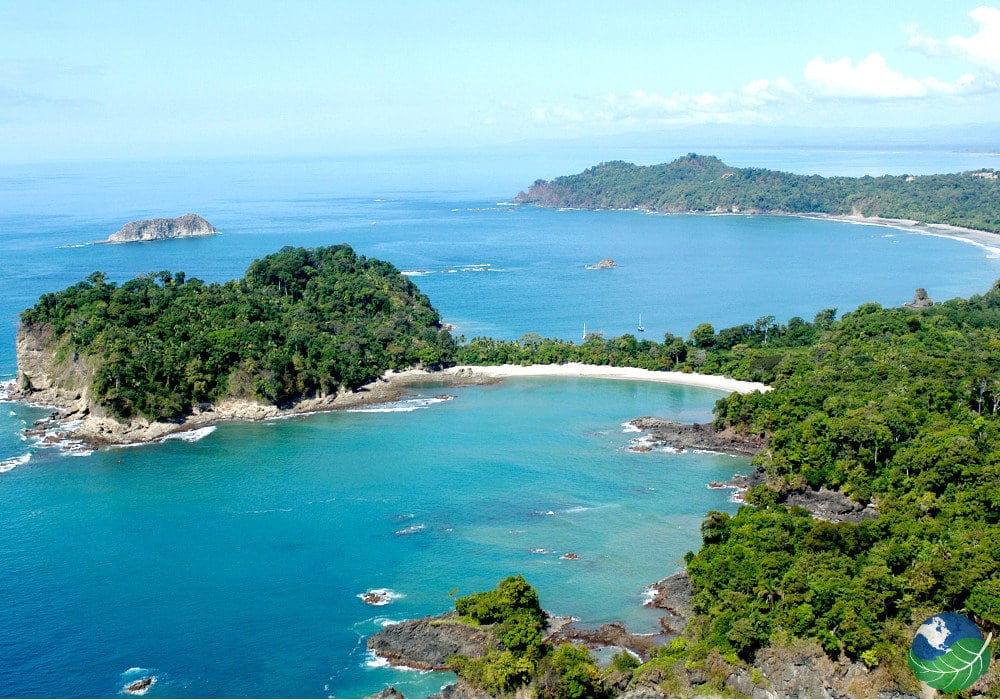
This side follows a textbook tropical pattern: the dry season from December through April and the rainy season from May through November. Guanacaste in the north is the driest region in the country during the dry season, with clear skies and low humidity for months at a time.
The Central Pacific around Manuel Antonio is lush year-round, but still follows the same general pattern.
The Caribbean Coast
This coast does not follow this pattern at all, running almost in reverse. September and October are the driest, sunniest months on the Caribbean side, which is also when the Pacific is at its wettest.
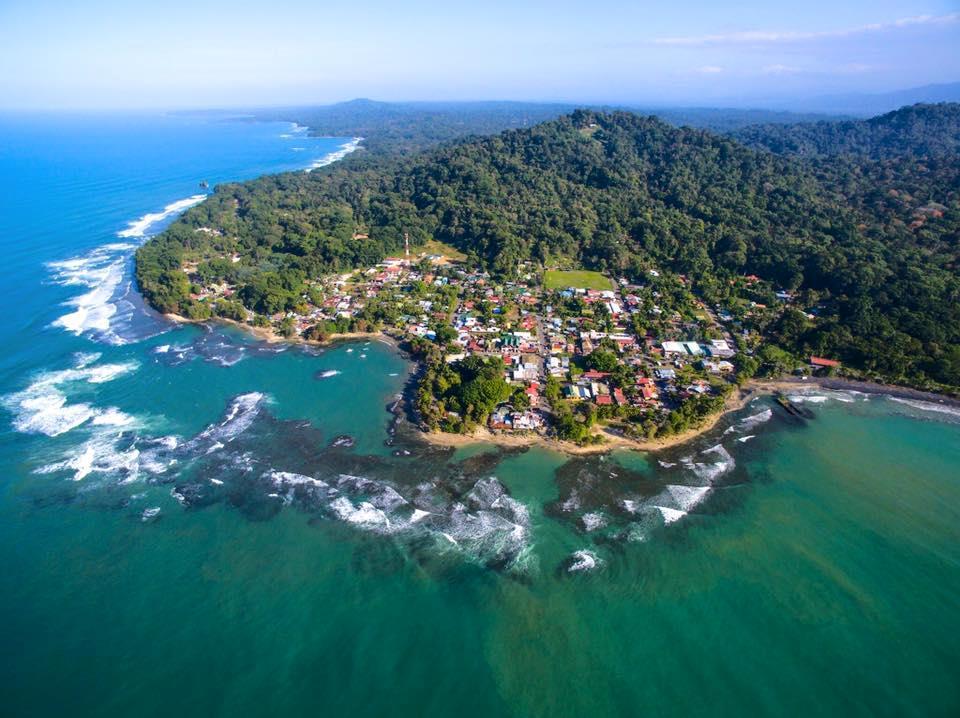
January through March, which is the peak dry season on the Pacific, sees some of the heaviest rainfall in Puerto Viejo and Cahuita. June and July offer a brief mini-dry stretch on the Caribbean that catches visitors off guard in a good way.
When to Book
- Travelers booking a December or January trip on the Caribbean coast will almost certainly encounter rain, and it won’t necessarily clear up by noon the way Pacific rainy-season showers often do.
- Travelers visiting in September or October who go to the Pacific will find conditions hit-or-miss and prices low for a reason.
| Month | Pacific Coast Conditions | Caribbean Coast Conditions |
| December-February | Dry, sunny, peak season, highest prices | Rainy, humid, lower visitor numbers |
| March-April | Dry, hot, busy (Holy Week crowds) | Improving; still wetter than Pacific |
| May-June | Rainy season begins; lush, uncrowded | Mini-dry season; good conditions |
| July-August | Regular afternoon showers; green landscapes | Wetter; sea turtle nesting in Tortuguero |
| September-October | Wettest months on Pacific | Driest months on Caribbean; best beach conditions |
| November | Shoulder season; conditions vary | Rainy; transitions toward Caribbean wet period |
Best Coast to Visit in Costa Rica for Wildlife
Both coasts deliver wildlife, but the type of experience differs enough that your specific priorities determine which wins.
The Pacific Coast
- This side has more national parks and more tourism infrastructure around them.
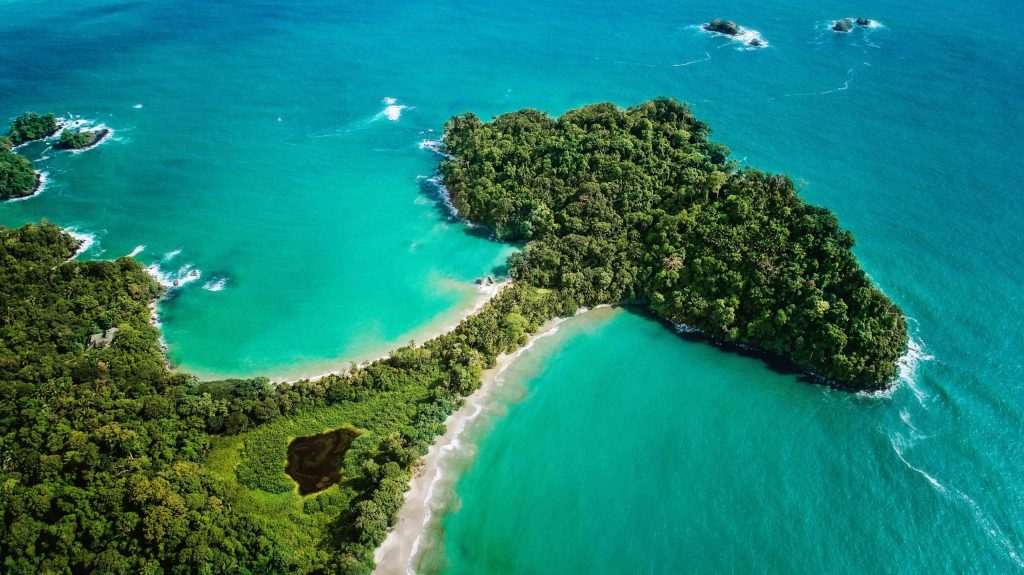
Manuel Antonio National Park, a 45-minute drive from Quepos, packs monkeys, sloths, and white-sand beaches into a compact area. The park is small enough to walk in a morning and popular enough to require advance reservations.
- Further south, Corcovado National Park on the Osa Peninsula is a more serious undertaking. It’s remote, requires guides, and is genuinely one of the most biodiverse patches of land on the planet, with jaguars, tapirs, and scarlet macaws.
- Whale watching out of Uvita near Marino Ballena National Park runs from July through October and again from December through April.
The Caribbean Coast
This coast’s wildlife anchor is Tortuguero National Park, accessible only by boat or small plane from the port of Moín near Limón. Four species of sea turtle nest on Tortuguero’s black sand beaches, with green sea turtle peak nesting from July through October.
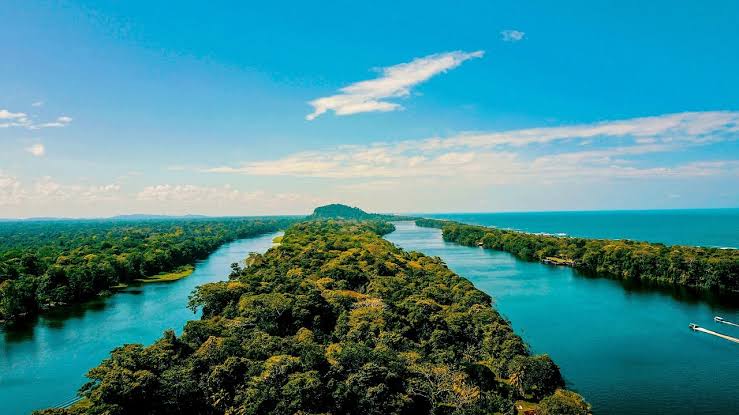
- The Amazon-like canal system running through the park is navigated by boat, and the wildlife viewing is dense: river otters, caimans, manatees, and more species of birds than most visitors know what to do with.
- South of Tortuguero, Cahuita National Park has something the Pacific largely lacks: functioning coral reefs. Snorkeling at Cahuita in good conditions puts you over the most intact reef ecosystem on Costa Rica’s coast.
- The Jaguar Rescue Center in Puerto Viejo charges $22 per adult for a guided tour of its rehabilitation facility, home to sloths, monkeys, and a rotating population of injured wildlife. It’s the best opportunity on either coast to see sloths at close range in a conservation context rather than from a moving car.
Town-Level Comparison: Puerto Viejo vs. Tamarindo, Costa Rica
Most visitors on the Pacific coast eventually choose between Tamarindo in Guanacaste or Manuel Antonio in the Central Pacific as their base. On the Caribbean, Puerto Viejo de Talamanca is the primary hub. Here’s how the main towns stack up.
Tamarindo (Pacific, Guanacaste)
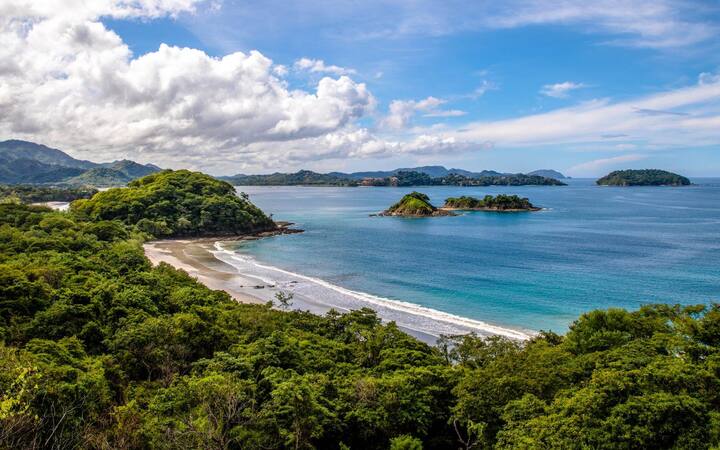
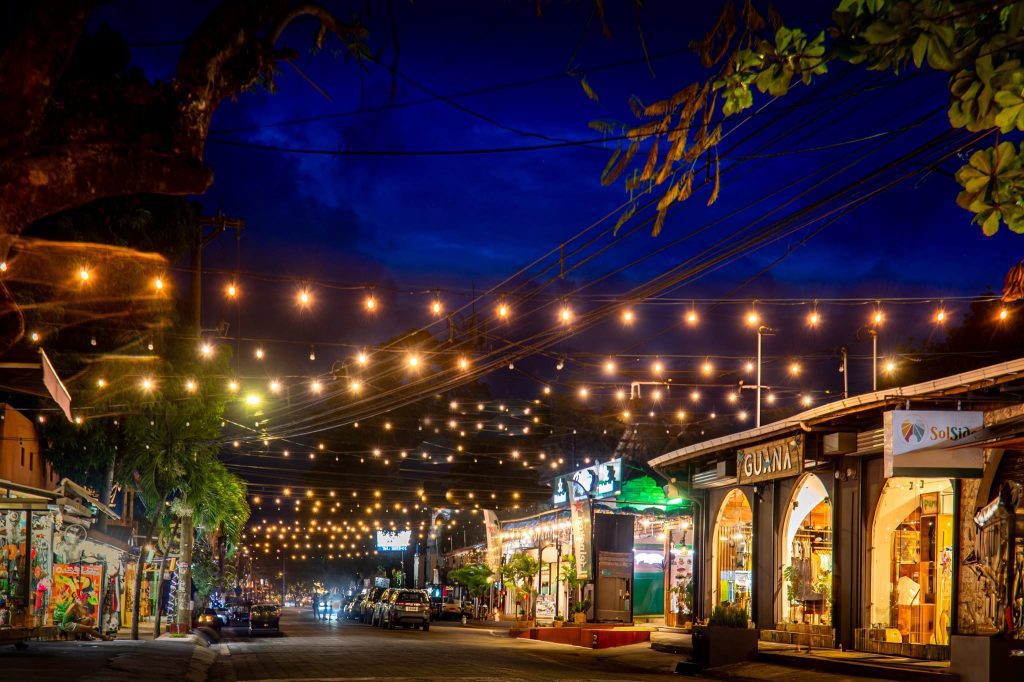
Tamarindo is the most developed beach town in Guanacaste, with consistent surf breaks at the main beach and Playa Langosta nearby, a walkable grid of restaurants and bars, and enough tour operator infrastructure to keep a group busy for a week without repeating anything.
- Surf lessons run around $55 for two hours through operators like Witch’s Rock Surf Camp, which has been operating at the main break since the early 2000s.
- Sunset sailing tours depart nightly for roughly $85 per person including open bar.
- The Tamarindo Wildlife Refuge estuary at the northern edge of town offers $40 boat tours that reliably produce crocodile sightings.
- The main beach itself isn’t swimming-friendly due to riptides and boat traffic, but Playa Langosta 10 minutes south and the protected cove at Playa Conchal 30 minutes north are both swimmable.
- Tamarindo’s has grown considerably and the main strip feels increasingly commercial during peak season. The restaurants are good, the surf schools are professional, and the logistics are easy, but the town no longer has the under-the-radar feel.
Manuel Antonio (Pacific, Central Pacific)
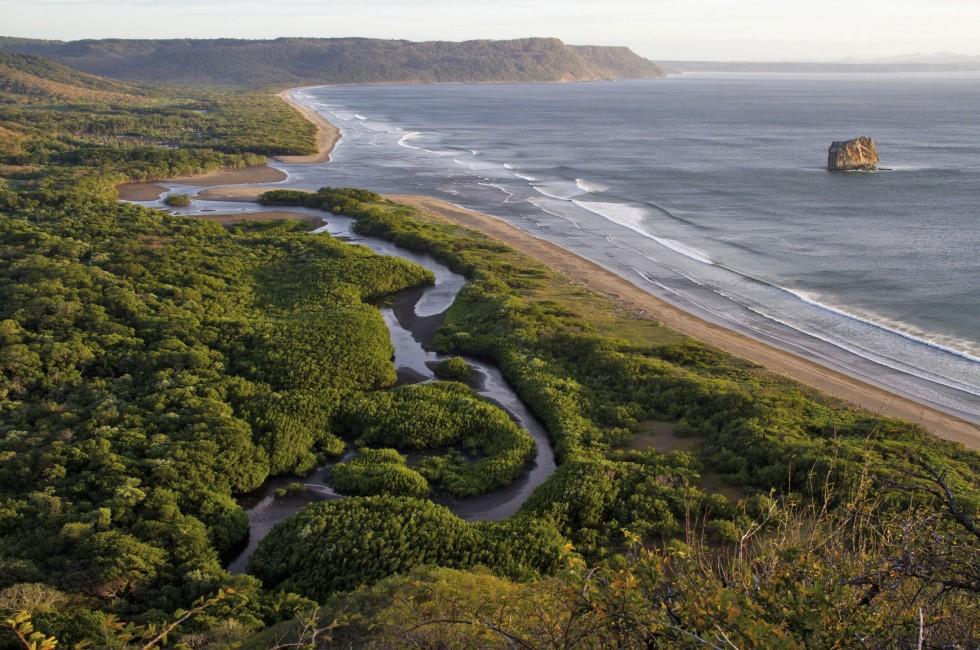
- Manuel Antonio sits 3 hours from San José International Airport via a paved road, and the town of Quepos just north is one of Costa Rica’s better small-town food hubs.
- The Friday and Saturday morning feria (farmers market) near the Quepos seawall is worth building a morning around. Check out local vendors that sell rambutan, tamarind, soursop, and fresh produce that ends up on the menus of nearby restaurants.
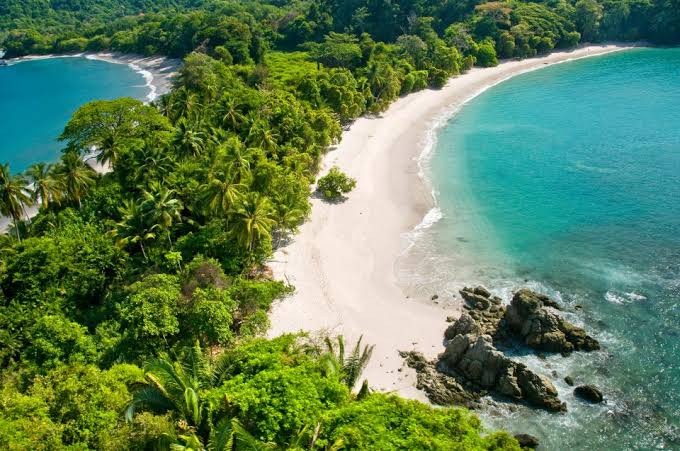
- Manuel Antonio National Park charges $20 per person for entry and requires advance online booking during peak season; the four beaches inside the park are among the most accessible white-sand swimming beaches on the Pacific coast.
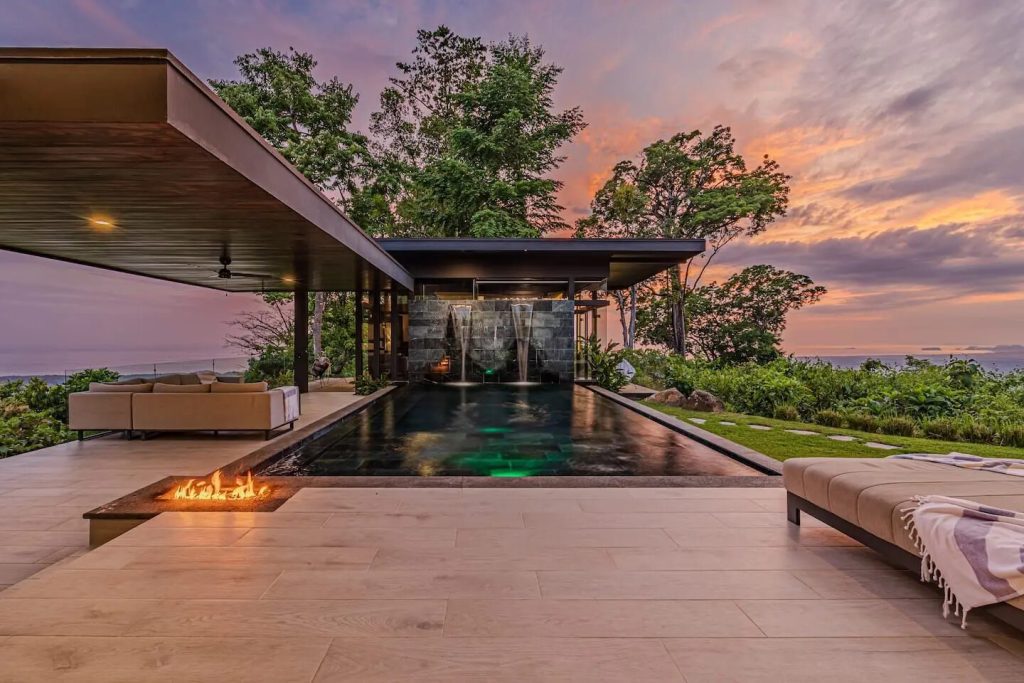
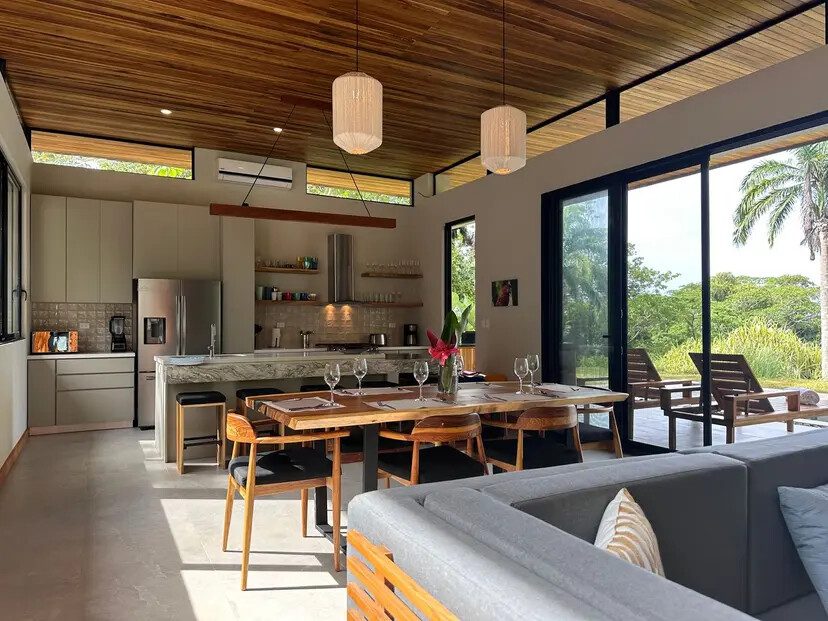
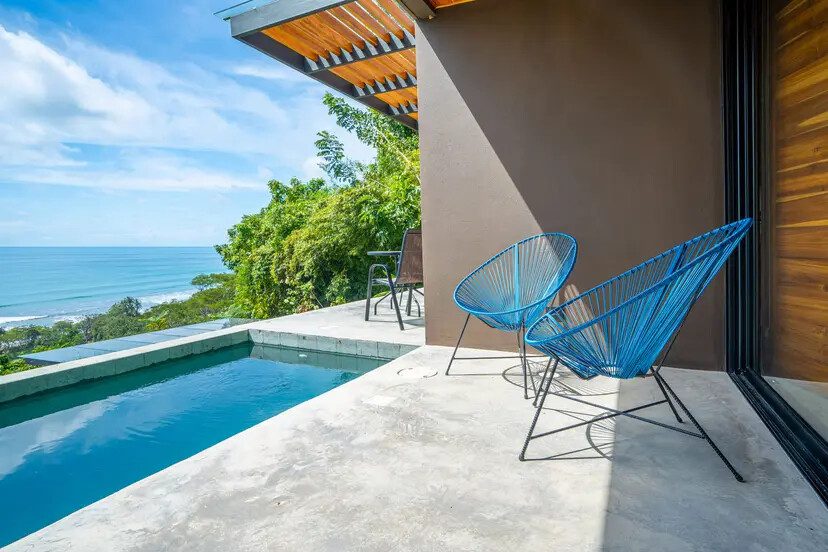
- The region also has the highest concentration of quality vacation rental homes on the Pacific, particularly properties with ocean views that would cost twice as much in Guanacaste.
Puerto Viejo de Talamanca (Caribbean)
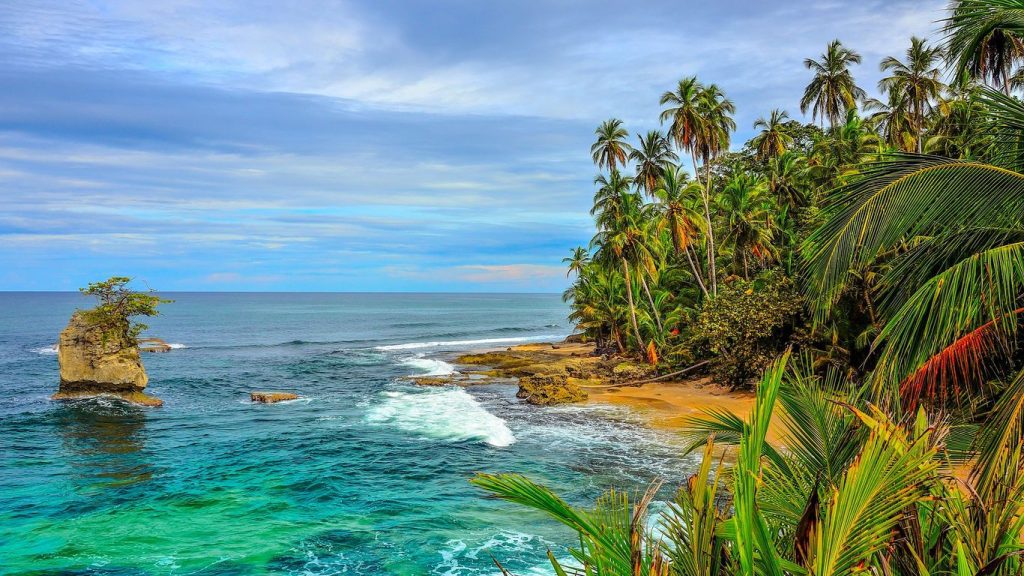
- Puerto Viejo is a 4-hour drive from San José down Route 32 and then south along the Caribbean coast highway.
- The town is small, navigated mostly by bicycle, and built around a reggae-influenced Afro-Caribbean culture that feels nothing like the Pacific beach towns. Salsa Brava, the most famous wave on the Caribbean coast, breaks hard over a shallow reef just offshore and is genuinely expert-only.
- Playa Cocles and the stretch down to Playa Punta Uva are the better options for most swimmers and beginner surfers.
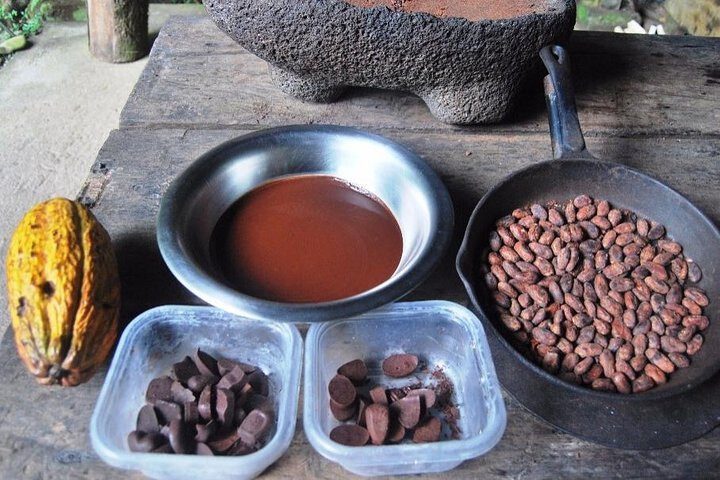
- The BriBri indigenous chocolate tour, departing from the community of Uatsi, runs around $60 per person and is one of the more authentic cultural activities available on either coast.
- Road conditions south of town can be rough, some properties are isolated, and medical facilities are limited compared to the Central Pacific or Guanacaste.
- First-timers who prioritize ease and predictability will have a smoother experience on the Pacific side.


Which Side Is Easier on Your Budget?
The Caribbean coast is consistently less expensive than the Pacific, and the gap is meaningful rather than marginal.
Accommodations
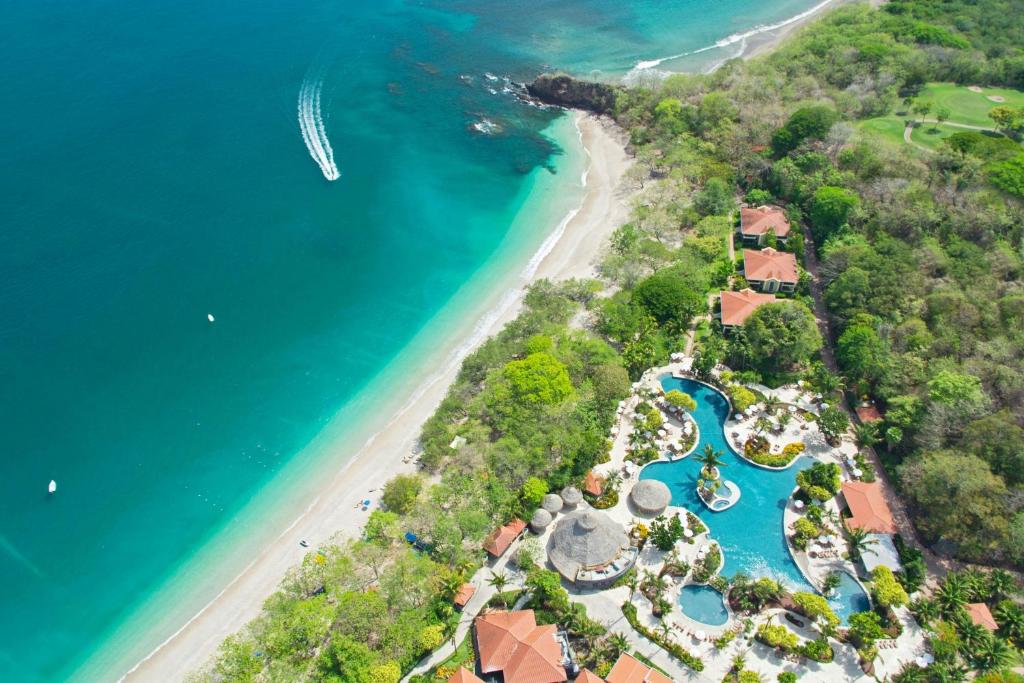
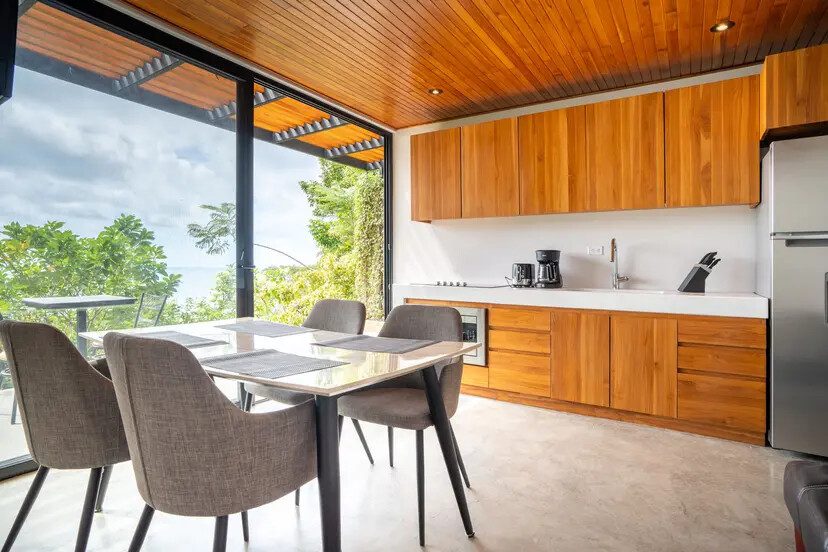
- Vacation rental homes and boutique guesthouses in Puerto Viejo and Cahuita run roughly 30-40% less than comparable properties in Tamarindo or Manuel Antonio.
- The Caribbean receives far fewer international visitors than the Pacific, so occupancy rates are lower and pricing reflects it.
- There are fewer luxury properties with private pools and full amenities on the Caribbean side, which pulls the average down.
Food
- The Afro-Caribbean cuisine staples in Puerto Viejo, particularly rice and beans cooked in coconut milk (a dish locals call “rice and beans” rather than the Pacific-side “gallo pinto”), are served at local sodas for $5-8 a plate.
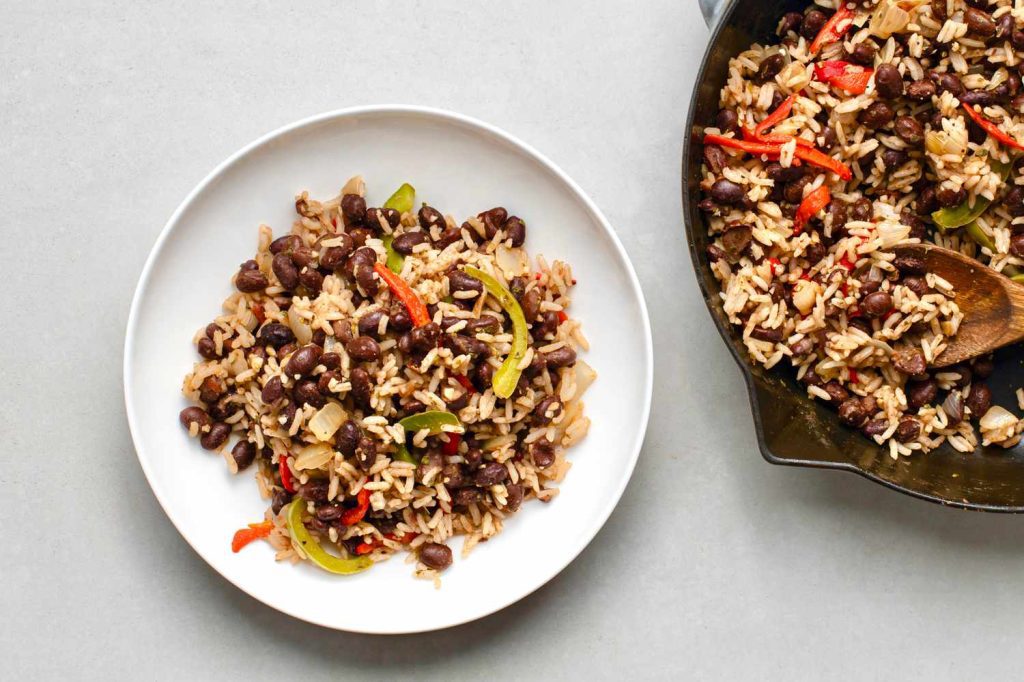
- In Tamarindo or Manuel Antonio, a sit-down dinner at a mid-range restaurant runs $25-45 per person with drinks, closer to what you’d expect at a beach town in Florida.
Activities
- Prices are roughly equivalent on both coasts for comparable experiences.
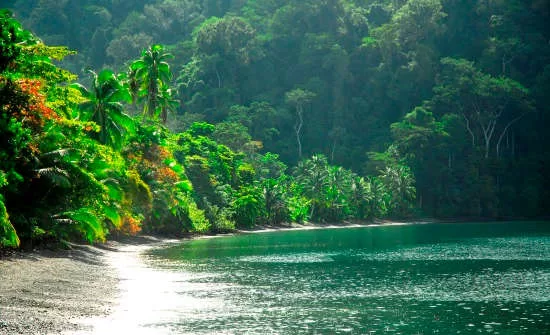
The exception is that Corcovado National Park on the Pacific’s Osa Peninsula, which requires a licensed guide and advance logistics, runs $100-200 per person for a day trip, making it one of the more expensive wildlife experiences in the country.
Airports, Driving, and What Nobody Warns You About
This is where the comparison becomes starkly practical.
The Pacific Coast
This side has two international airports. Liberia International Airport (LIR) in Guanacaste puts you 45 minutes from Tamarindo and is the right choice for anyone focusing on the North Pacific. San José International Airport (SJO) is the main hub and the right choice for Manuel Antonio, Quepos, Jaco, and the Southern Pacific, with paved highway access under 3 hours in each direction.
The Caribbean Coast
The Caribbean coast is only served by San José International Airport, and the drive to Puerto Viejo is 4 hours under good conditions. Route 32 between San José and Limón is a good highway, but the final stretch south along the Caribbean coast to Puerto Viejo on Route 36 narrows and slows things down. This matters for short trips because visitors with 5 nights or fewer will spend a disproportionate chunk of their trip in transit if they choose the Caribbean.
Can You Visit Both Coasts on One Trip?
Yes, but it requires realistic planning and a good bit of time.
- The drive from Tamarindo to Puerto Viejo takes 6-7 hours on a good day.
- The drive from Manuel Antonio is slightly shorter at 5-6 hours, which is why the most practical “both coasts” itinerary routes through San José and includes a few nights on the Pacific, one night near San José, then transit east to the Caribbean.
- Some travelers incorporate Arenal or Monteverde as a midpoint, which adds significant scenic value and breaks the journey into manageable chunks.
Two weeks is a workable minimum for a satisfying both-coasts trip. Anything shorter will feel rushed and will force you to cut out experiences like a Tortuguero canal tour that require an overnight.
One geographic quirk worth knowing: on a clear day, you can theoretically watch sunrise on the Caribbean and sunset on the Pacific on the same day. The drive from Cahuita to Jaco is about 5 hours, which makes it tight but doable. Most people who attempt this are chasing bragging rights rather than a quality experience at either beach.
Choose the Pacific Coast If…
- You want predictable sunny weather during dry season (December through April)
- First-timer or family trip with less tolerance for logistical complexity
- Surf is a priority: Tamarindo, Santa Teresa, Nosara, and Dominical all have consistent breaks
- You want national park access with established infrastructure: Manuel Antonio, Corcovado
- Your flight into Liberia Airport means the Pacific is simply closer
- A wide selection of vacation rental homes with private pools is a priority
- You’re staying fewer than 10 days and want to maximize beach time rather than transit
Choose the Caribbean Coast If…
- You’re traveling in September or October when the Caribbean is at its best and the Pacific is at its wettest
- Afro-Caribbean culture, reggae atmosphere, and distinctly different food are part of what you came for
- Sea turtle nesting at Tortuguero (July-October for green turtles) is on your list
- Budget is a constraint and you want comparable natural beauty for less money
- The Jaguar Rescue Center, Cahuita National Park’s coral reefs, or BriBri cultural experiences appeal more than another surf town
- You’ve already done the Pacific on a previous trip and want to see the side of Costa Rica most visitors miss
Frequently Asked Questions
Which coast of Costa Rica is better for first-timers?
The Pacific coast is generally the easier choice for first-time visitors. It has more developed infrastructure, paved roads to most destinations, two international airports, and the widest selection of vacation rentals and tour operators. Tamarindo and Manuel Antonio are both well-suited to first timers. The Caribbean coast is rewarding, but requires more planning and longer drives from the only international hub at San José.
What is the best coast to visit in Costa Rica in October?
October is the best month to visit the Caribbean coast. September and October are the driest, sunniest months on the Caribbean side, while the Pacific is at its wettest during the same period. Puerto Viejo and Cahuita experience genuinely good beach conditions in October, while Guanacaste and Manuel Antonio are dealing with heavy rainfall. It’s one of the best-kept timing secrets in Costa Rica travel.
Is the Caribbean coast cheaper than the Pacific coast in Costa Rica?
Yes, consistently. Vacation rental homes and guesthouses on the Caribbean run roughly 30-40% less than comparable Pacific coast properties. Restaurant meals at local sodas in Puerto Viejo cost $5-8 for a full plate. The main reason is demand: the Caribbean receives a fraction of the international visitor volume that Guanacaste and Manuel Antonio do, which keeps prices lower across accommodations, food, and activities.
How far is Puerto Viejo from Tamarindo?
The drive from Tamarindo to Puerto Viejo de Talamanca takes approximately 6-7 hours, crossing through the Central Valley and San José. Most travelers who want to visit both towns build in a midpoint stop, often at La Fortuna or Arenal, to break up the drive. A two-week minimum trip length is recommended if you want to spend meaningful time on both coasts rather than mostly driving between them.
Which coast of Costa Rica has better beaches for swimming?
It depends on the season. During the dry season (December-April), Pacific beaches like Playa Conchal, Playa Flamingo, and Manuel Antonio’s park beaches are excellent for swimming. The Caribbean coast’s best swimming beaches, particularly at Cahuita and Playa Punta Uva near Puerto Viejo, shine brightest in September and October. Cahuita National Park also has the country’s best coral reef for snorkeling, which gives it an edge for underwater activity when conditions are clear.
Is Tortuguero worth visiting from the Pacific coast?
It depends on your itinerary length. Tortuguero is only accessible by boat from the port of Moín near Limón, which adds a logistical layer on top of the 4-5 hour drive from San José. Most visitors do Tortuguero as a dedicated overnight or multi-night trip rather than a day excursion. The experience of the canal wildlife and sea turtle nesting (July-October for green turtles) is unlike anything on the Pacific coast, and most travelers who make the effort consider it one of the best parts of their Costa Rica trip.
Which side of Costa Rica has better surfing?
For consistency and volume of breaks, the Pacific wins. Tamarindo, Santa Teresa, Nosara, Dominical, and Jaco all have established surf cultures and schools, and the Pacific swells run most consistently from May through November. The Caribbean’s Salsa Brava near Puerto Viejo is one of the heaviest waves in Central America and reaches its best from December through April, but it’s a reef break suited to experienced surfers only. Beginner and intermediate surfers will have more options on the Pacific.
Do I need a 4WD on the Caribbean coast of Costa Rica?
Not everywhere, but more often than on the Pacific. The main highway from San José to Puerto Viejo (Route 32 to Route 36) is paved and accessible in a standard car. Side roads to more remote properties or beaches south of Puerto Viejo toward Manzanillo and Gandoca can require a high-clearance vehicle. As a general rule, if your rental property is off the main road on the Caribbean side, ask the host directly about road conditions before arriving in a standard sedan.