
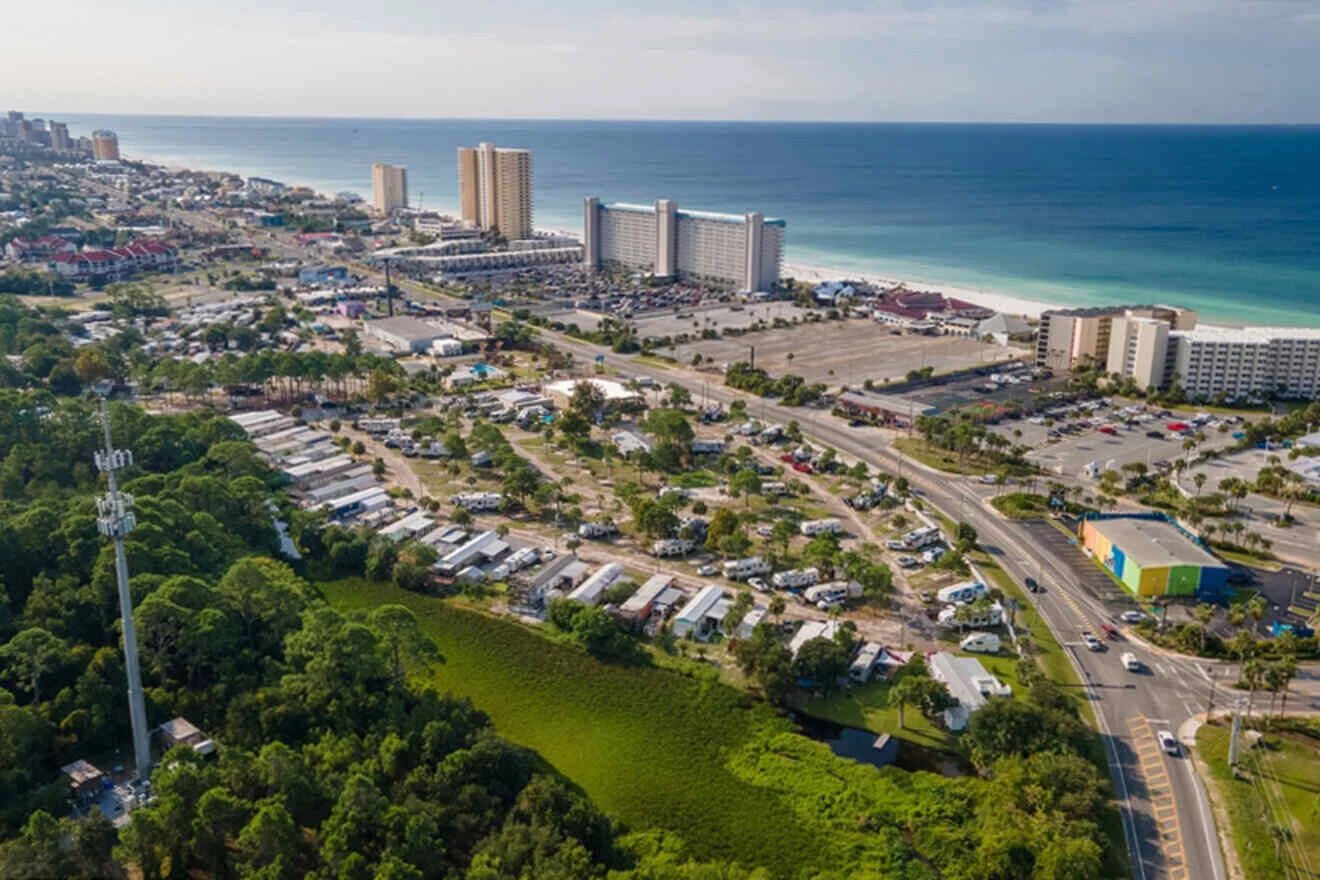
If you’re researching areas to avoid in Panama City Beach, you’re already asking the right question. Panama City Beach is genuinely a good family destination for most of the year. The sand is white, the Gulf water is warm, and there is more to do here than most beach towns three times its size.
But it also has a reputation, and that reputation is not entirely undeserved. If you book in the wrong spot at the wrong time of year, your family vacation can turn into something very different from what you expected.
This guide tells you which areas and time windows to steer clear of, why, and which neighborhoods consistently work well for families traveling with kids. It is not about scaring you off PCB entirely— it’s about helping you book smart.
PCB Is Safe, But Timing and Location Matter
First, some context. Panama City Beach as a whole carries a B+ crime grade and sits in the 75th percentile for safety nationally, meaning it’s safer than 75% of U.S. cities.
Property crime is the main concern, not violent crime, and tourist areas are generally well-patrolled. The city receives around five million visitors per year, and the overwhelming majority have great, safe trips.
The real problem for families is not crime in the traditional sense. It’s crowd character during a specific window of the year, and concentration of activity in specific zones that do not mix well with young children.
Here is the honest breakdown:
This table summarizes the areas to avoid in Panama City Beach.
| Problem Area | Time Window | Primary Issue | Severity for Families |
| Front Beach Road corridor (Pier Park to Thomas Drive) | March 1 – April 14 | Spring break crowds, arrests, traffic gridlock | High |
| Club La Vela / Spinnaker Beach Club zone | Year-round, especially March–May | Nightclub concentration, late-night noise | Moderate–High |
| Central strip condos (general) | July 4 weekend | Peak overcrowding, parking failure, beach density | Moderate |
| Inland budget motels near Back Beach Road | Any time | Distance from beach, limited amenities | Low (inconvenience only) |
The Spring Break Problem Is Real, But It Has Changed in 2026
The spring break problem is the main reason people search for areas to avoid in Panama City Beach. Spring break in Panama City Beach peaked in chaos during the late 1980s through the early 2000s, and the city has been actively reforming ever since.
This year has brought the toughest crackdown the city has attempted yet, partly because the 2025 season was described by the PCB Police Chief as “hectic and violent,” with 693 adult arrests, 77 juvenile arrests, and 61 firearms seized between March 1 and April 14 alone.
For spring break 2026, the city established three designated “high-impact zones” where additional law enforcement, double towing fines, and crowd control measures apply. One of those zones covers all of Pier Park, portions of Front Beach Road from Clara Avenue to Lyndell Lane, and areas around South Thomas Drive.
There’s also a citywide ban on alcohol on the sandy beach for the entire month of March, an 8 p.m. curfew for unaccompanied minors, and the legal authority to close beach access points with little notice if crowds become unsafe.
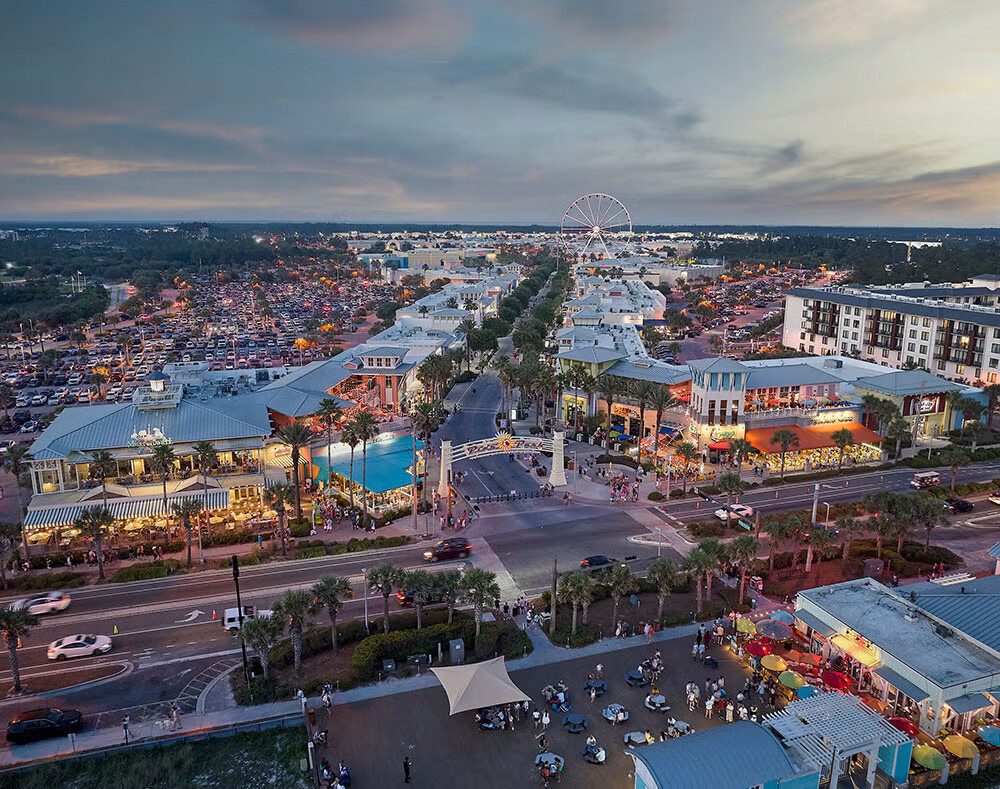
One of those zones covers all of Pier Park, portions of Front Beach Road from Clara Avenue to Lyndell Lane, and areas around South Thomas Drive. There’s also a citywide ban on alcohol on the sandy beach for the entire month of March, an 8 p.m. curfew for unaccompanied minors, and the legal authority to close beach access points with little notice if crowds become unsafe.
What does this mean for families considering a March or early April visit? The enforcement is more visible and serious than it used to be, which is good news.
But even with stricter rules, the overall crowd composition during spring break is still skewed heavily toward college students, and Front Beach Road during those weeks is a different experience from the rest of the year. Traffic moves at 10 miles per hour or less in the evenings, parking at beach access points is chaotic, and the general noise level is higher.
Key Takeaway: If you’re traveling with kids under 15, March 1 through April 14 is the window to avoid, or at minimum to avoid the central strip neighborhoods. Families who do visit PCB during spring break and have a positive experience tend to base themselves in Laguna Beach on the west end or Lower Grand Lagoon on the east, away from the high-impact zones, and spend their days at St. Andrews State Park rather than on the main beach strip.
Areas to Avoid in Panama City Beach: What to Know
The Club Strip (Club La Vela to Spinnaker Beach Club Area)
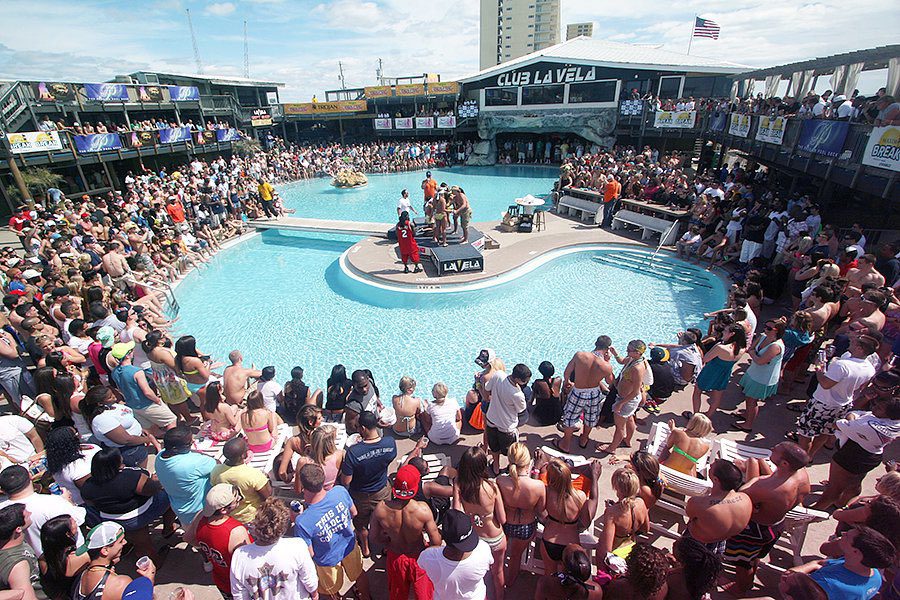
The Club La Vela stretch is one of the most commonly cited areas to avoid in Panama City Beach for families. Club La Vela is one of the largest nightclubs in the United States, and it operates year-round, not just during spring break.
The surrounding cluster of bars, music venues, and late-night businesses means that this section of Front Beach Road stays active well past midnight on weekends throughout the summer.
This doesn’t make it dangerous in a safety sense, but if you’re renting a condo within a few blocks of this stretch and traveling with young children, you’ll notice the noise.
The Over-Developed Central Condo Strip Around July 4th
The central strip during July 4th is another area to avoid in Panama City Beach if crowd density is a concern. The week surrounding July 4th is when PCB hits its absolute peak crowd density.
The central strip, particularly the Long Beach and Open Sands areas, can have beach sections so crowded that finding space is difficult. Parking at public beach access points fills by 8 or 9 a.m. Traffic on Front Beach Road during the afternoon and evening is as bad as it gets.
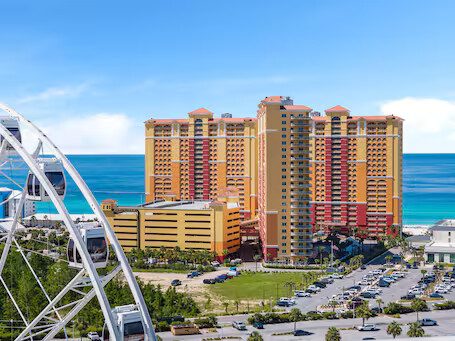
This is not a reason to avoid PCB in early July, but a reason to set expectations and plan accordingly. Families who arrive early to the beach, use the private beach access that comes with most vacation rental homes, and drive during off-peak hours manage perfectly well.
Budget Inland Motels on Back Beach Road
This one is less about safety and more about getting what you paid for.
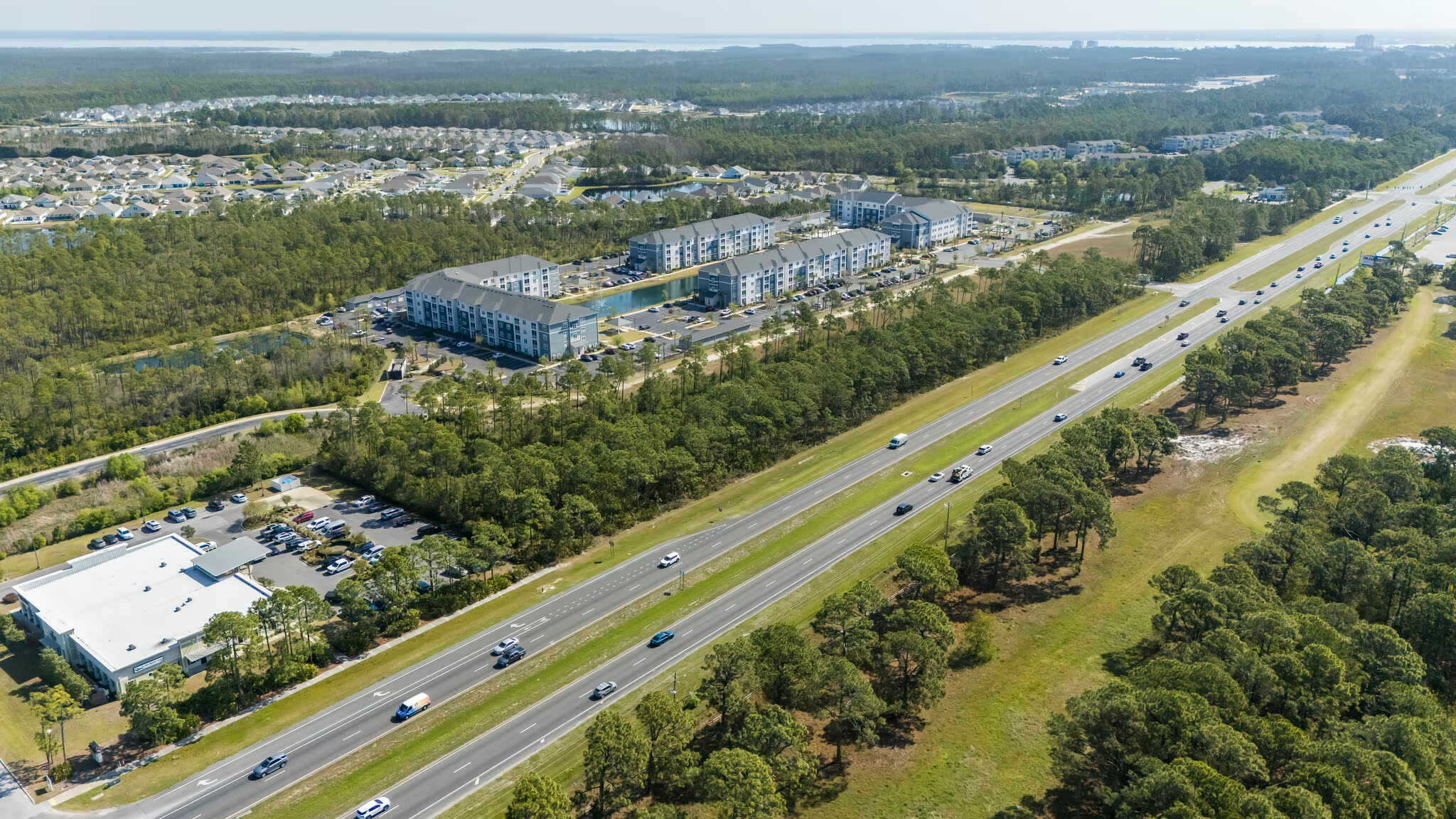
Back Beach Road runs parallel to Front Beach Road a half-mile or more inland, and there are a number of budget accommodations here that advertise themselves as Panama City Beach without mentioning that you’ll need to drive or cycle to reach the Gulf.
For families, this trade-off often does not work well.
If the budget requires going inland, this is fine. Just map the actual walking or driving route to the nearest beach access point before you commit to the booking.
Where Families Actually Want to Stay
Here’s the flip side. Check out the areas that consistently get positive reviews from families and spots where people come back year after year.
Lower Grand Lagoon
The Lower Grand Lagoon, on the eastern end of PCB’s main stretch, is the most consistently recommended base for families who want a quieter Gulf-side experience with easy access to nature. The key reason is proximity to St. Andrews State Park.
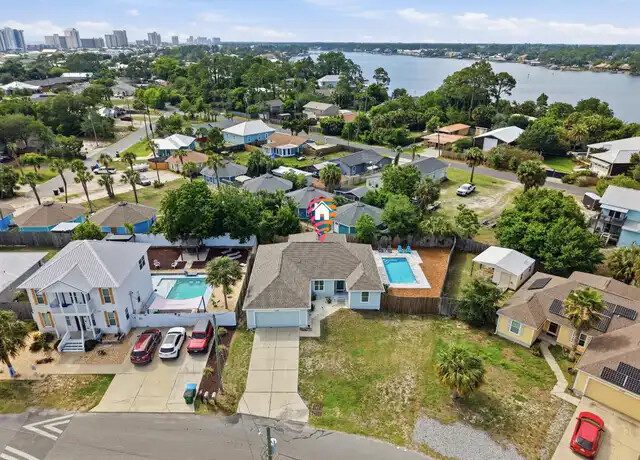
The Shell Island Ferry runs from inside the park to an uninhabited barrier island 15 minutes offshore, where the water is some of the clearest in the Panhandle. The park fills up on peak summer weekends, so arriving by 9 a.m. is wise.
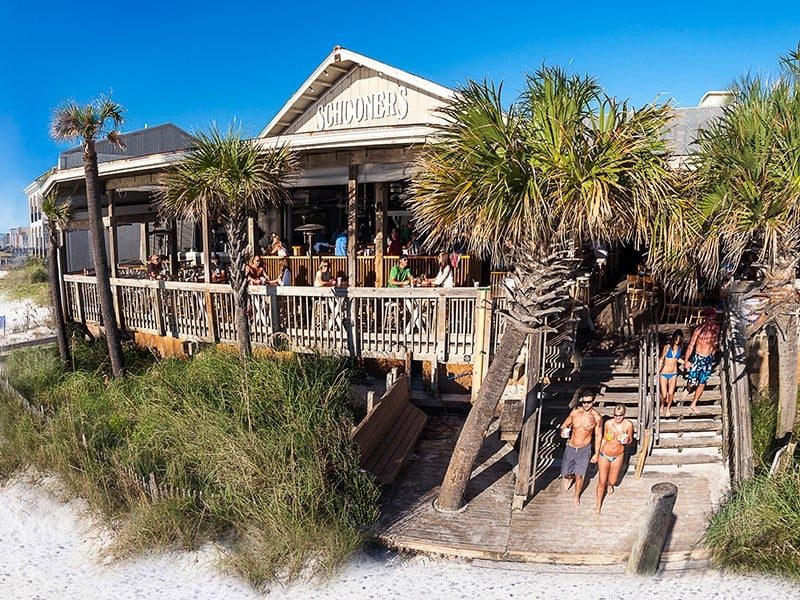
For dinner, Schooners Last Local Beach Club is the neighborhood anchor with an open-air, casual vibe. For a special night, Firefly is the upscale local favorite with locally caught seafood and an 1,800-degree broiler.
Laguna Beach (West End)
Laguna Beach sits roughly 10 miles west of the Pier Park hub, and the commercial density drops significantly. The residential character of the area, which landowners fought to preserve decades ago, means larger homes on bigger lots with more beach breathing room.
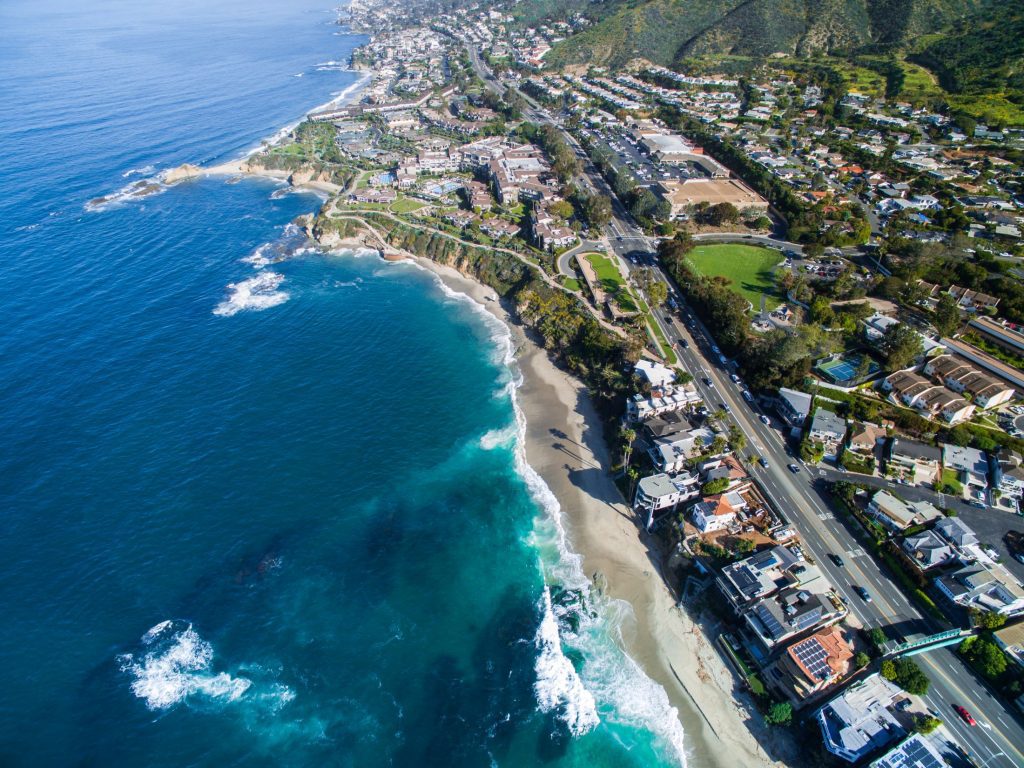
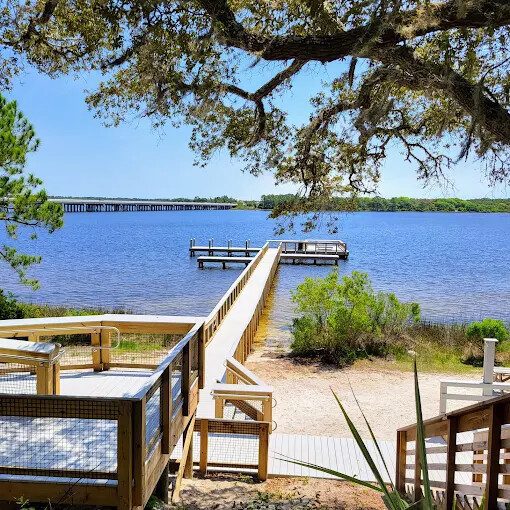
The public beach access walkovers along Laguna are generally less crowded than the central strip, even in summer. Camp Helen State Park is a few miles further west, where 183 acres wrap around Lake Powell. Entry is $3 per vehicle, and the park is good for fishing, birdwatching, and kayaking without the summer crowds that St. Andrews draws.
The trade-off is distance. From Laguna Beach, St. Andrews State Park is about 25 minutes away, and Pier Park is about 15. You’ll be driving for most activities beyond the beach itself. Families who are beach-focused and less interested in amusements or nightlife find this works perfectly. Families who want activity variety within walking distance will find it limiting.
The Area Around St. Andrews State Park
Families whose vacations center on the water, rather than the strip, should seriously consider the eastern end of PCB near the park entrance. Vacation rentals in the Upper and Lower Grand Lagoon area include both bayside and Gulf-front properties, and the park is so close that morning visits before the crowds arrive are a breeze.
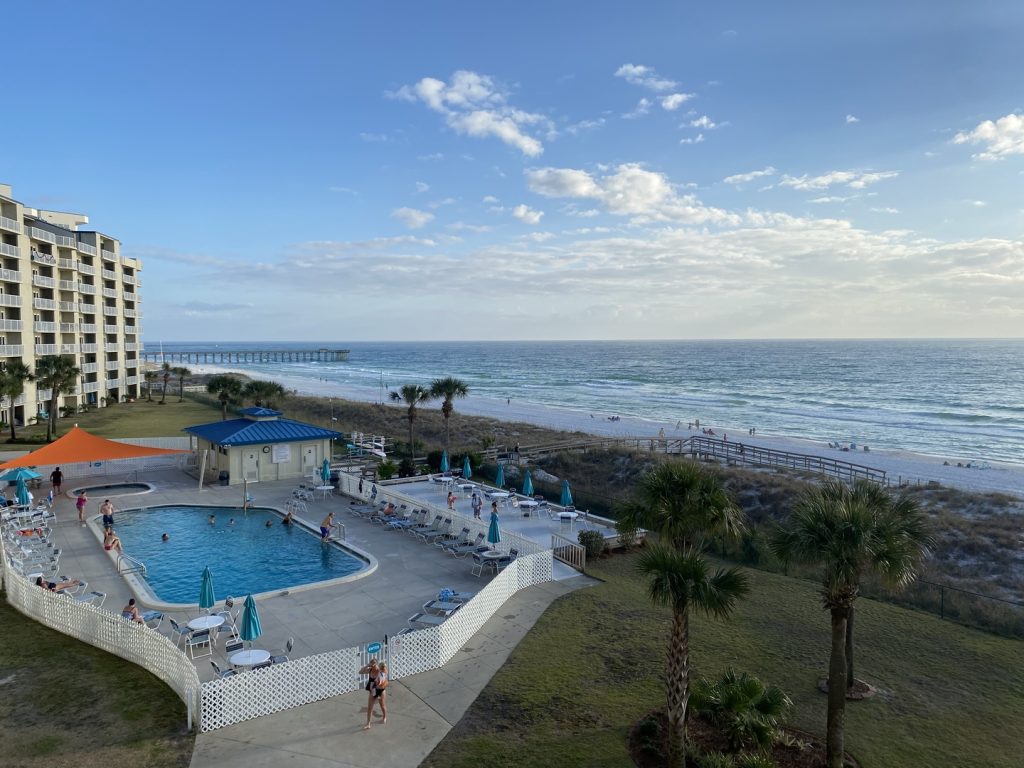
The park’s calm swimming area on Grand Lagoon is particularly good for younger kids who find Gulf waves intimidating.
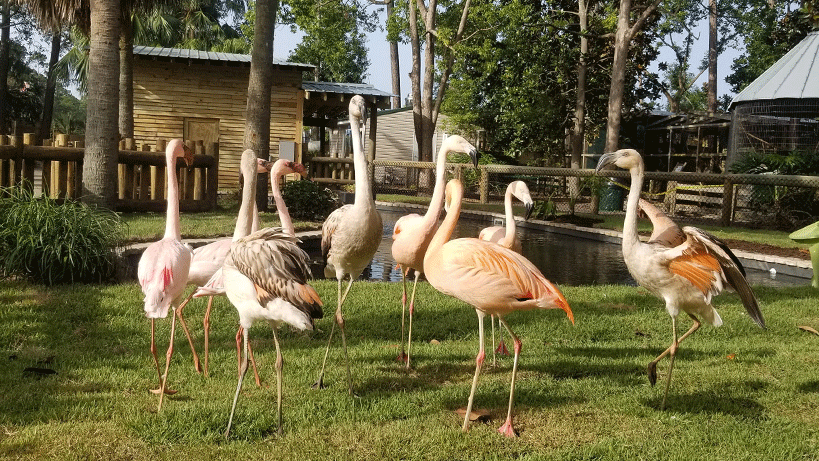
ZooWorld Zoological Park is a 10-minute drive and works well as a half-day activity on days when beach weather is not cooperating.
With over 260 animal species including big cats, primates, and reptiles, and interactive experiences like feeding alligators and petting sloths, it holds up better for older kids than a standard zoo.
Quick Reference: What to Avoid vs. Where to Go
| If You’re Worried About… | Avoid | Choose Instead |
| Spring break crowds | Pier Park area, Thomas Drive corridor, March 1–April 14 | Laguna Beach west end or Lower Grand Lagoon |
| Nightlife noise in your rental | Properties within 0.5 miles of Club La Vela / Thomas Dr | Lower Grand Lagoon, Laguna Beach |
| July 4th crowd crush | Public beach access on central strip mid-day | Private-pool vacation home with beach walkover, early morning beach |
| Distance from beach | Inland budget motels on Back Beach Road | Gulf-front or beach-access rentals in any neighborhood |
| Spring break at any price point | Anywhere on the central strip in March | Laguna Beach or Lower Grand Lagoon, which are calmer even during spring break |
Practical Tips for Families Booking in 2026
A few things worth knowing before you finalize anything:
- Avoid the week of March 1 through April 14 unless your kids are old enough to handle a lively scene or you are specifically basing yourselves in Laguna Beach or Lower Grand Lagoon. The spring break regulations are real and enforced, but the crowd composition during that window is simply not built around family vacations.
- Book vacation rentals with private beach access or a private pool. The central strip’s public beach access points can be frustratingly full by mid-morning in July, and families with young children don’t love the logistics of lugging gear through a crowded public walkover.
- Schedule either May or late September through October to enjoy the sweet spots for families. Water temperatures stay above 75°F through October, crowds drop after Labor Day, and rental prices fall 25 to 40% below peak summer rates.
Frequently Asked Questions
What areas of Panama City Beach should families avoid?
Families should avoid the central Front Beach Road corridor from around the Pier Park area east to Thomas Drive during spring break (March 1 through April 14), when the crowd composition is heavily skewed toward college students and enforcement is high.
The section nearest Club La Vela and Spinnaker on Thomas Drive also has the most late-night noise year-round. For quieter family stays, the Lower Grand Lagoon and Laguna Beach areas are the consistent local recommendations.
Is Panama City Beach safe for families in 2026?
Yes, overall. PCB carries a B+ crime grade and is safer than 75% of U.S. cities. The city has implemented its toughest spring break regulations yet for 2026, including a full-month alcohol ban on the beach in March, curfews for unaccompanied minors, and designated high-impact enforcement zones. Outside of the spring break window, the city is a genuinely family-friendly destination.
Is Front Beach Road safe for families?
Front Beach Road is fine for families during most of the year. During spring break (March 1 to April 14), the stretch near Pier Park and Thomas Drive becomes congested, noisy, and difficult to navigate with young children. The same road in June, September, or October is a completely different experience.
If you’re visiting during spring break, using Back Beach Road (Highway 98) for travel and basing yourselves east or west of the high-impact zones makes a big difference.
What is the quietest area of Panama City Beach?
Laguna Beach on the far west end is consistently the quietest area, with fewer high-rise condos, less commercial density, and residential neighborhoods that resisted heavy development. The Lower Grand Lagoon on the east side is also notably quieter than the central strip, particularly outside of peak summer months.
What is the spring break curfew in Panama City Beach 2026?
For spring break 2026, unaccompanied minors have an 8 p.m. curfew in PCB. Minors are also not allowed at places serving alcohol after 10 p.m. without an adult. The city has designated three high-impact zones covering key sections of Front Beach Road and Thomas Drive where additional enforcement, double towing fines, and the authority to close beach access points are in effect from late March through mid-April.
Is Panama City Beach good for families outside of spring break?
Yes, substantially. The end of summer is one of the best-kept secrets for families because the Gulf water temperatures hold in the high 70s°F through October, crowds drop off dramatically after Labor Day, and rental prices can be 25 to 40% lower than peak summer rates. June and the first half of August are also good, with school vacation timing bringing family crowds rather than the spring break demographic.
Where should families stay in Panama City Beach to be near the best beach?
Lower Grand Lagoon puts families closest to St. Andrews State Park, which has consistently calmer and more natural beaches than the main strip, plus the Shell Island Ferry for $16 to $23 round-trip to an undeveloped barrier island.
Families who want Gulf-front beach access closer to dining and activities tend to prefer Long Beach or the Pier Park area, with the understanding that those areas are busier.
Is the west end of Panama City Beach better for families than the east end?
Both work well, and it depends on your priorities. The west end (Laguna Beach) is quieter and more residential, with fewer crowds and less development, making it good for families who want a peaceful beach stay with minimal stimulation.
The east end (Grand Lagoon) is better for families who want access to nature at St. Andrews State Park and the St. Andrews Bay. The central strip in between has the most dining and entertainment options but the highest seasonal crowd pressure.
Find your peaceful getaway in Panama City Beach.
Now that you know the areas to avoid in Panama City Beach, find a rental in the right neighborhood.