

The best time to visit Cabo San Lucas depends more on what you’re optimizing your trip for. If you want guaranteed sunshine and the full whale watching experience, December through April is your window. If you want the lowest prices with decent weather, May, June, October, and November are the sweet spot. If you want to be alone on Medano Beach and don’t mind the heat, August delivers.
This guide covers every month in enough detail to make the right call for your specific trip, including the honest trade-offs that most guides skip.
Cabo San Lucas Weather by Month: The Full Breakdown
| Month | Avg High °F | Avg Low °F | Rainfall | Rental Pricing Tier | Best For |
| January | 77°F | 60°F | Near zero | Peak — book 3+ months out | Whale watching, beach weather, golf |
| February | 78°F | 61°F | Near zero | Peak | Whale watching, couples travel, Art Walk |
| March | 80°F | 63°F | Near zero | Peak — spring break surge | Whale watching (final weeks), beach days |
| April | 84°F | 66°F | Very low | High | Beach, diving, whale watching tail end |
| May | 88°F | 70°F | Very low | Shoulder — 20-30% savings | Best value, uncrowded, warm water |
| June | 91°F | 75°F | Low | Shoulder — 20-30% savings | East Cape surf, fishing, value month |
| July | 94°F | 78°F | Low-moderate | Low season | Sport fishing peak, nightlife, quiet beaches |
| August | 95°F | 79°F | Moderate | Low season — best deals | Budget travel, sea turtle nesting, fishing |
| September | 93°F | 78°F | High (hurricane risk) | Lowest prices of year | Budget only; storm risk is real |
| October | 89°F | 74°F | Low-moderate | Shoulder — rising | Bisbee’s tournaments, value, clearing weather |
| November | 83°F | 67°F | Very low | Shoulder to High | Excellent weather, good deals, whale season starts |
| December | 79°F | 62°F | Near zero | Peak — holiday surge | Whale watching opens, holiday atmosphere, golf |






Seasons in Cabo San Lucas & Weather by Month
High Season (December – April): The Reliable Window
This is when the best time to visit Cabo San Lucas aligns with the most predictable conditions.
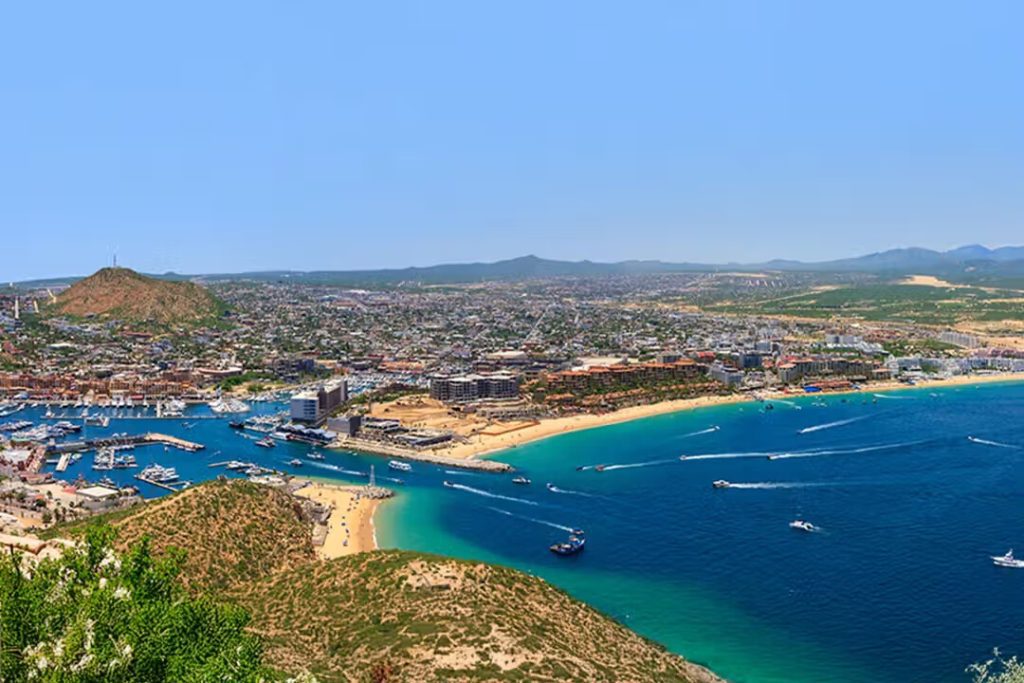
- Average highs stay between 77°F and 84°F
- Rainfall is essentially zero from December – April
- The Sea of Cortez calms to glassy conditions most mornings
December through March is peak pricing territory, so keep that in mind when booking.
- Vacation rental homes in Pedregal and the Tourist Corridor that run $350-500/night in October climb to $600-1,200+/night during Christmas week and the weeks surrounding spring break in March.
- Restaurant reservations at spots like Cocina de Autor at Grand Velas and Don Manuel’s at the Waldorf Astoria Pedregal book out weeks in advance.

- Whale watching tours from the Cabo marina fill by mid-morning by January.
- Holy Week (Semana Santa), the week before Easter, brings a significant wave of Mexican domestic tourists to Los Cabos in addition to international visitors.
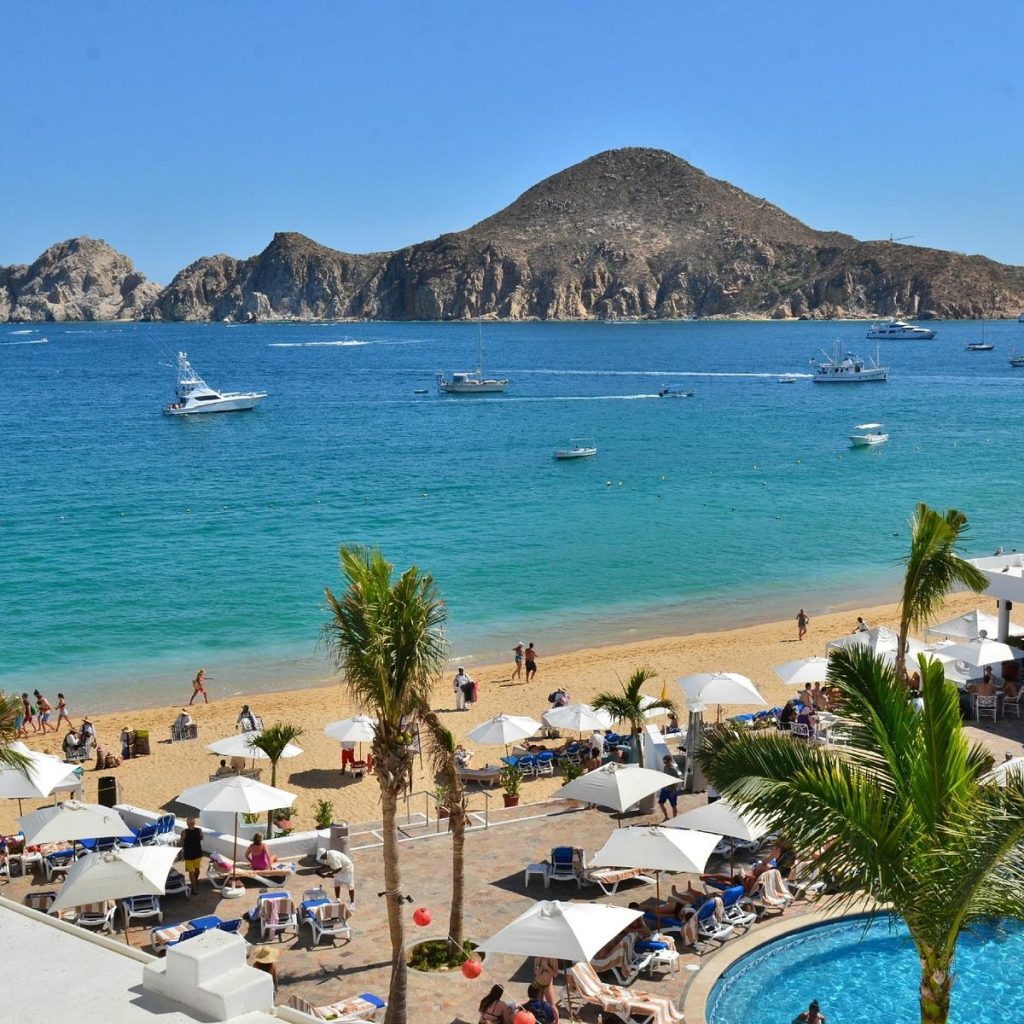
- The beach club scene at Medano Beach reaches full capacity by 11 a.m. on peak days.
- Tip: Experienced travelers who want high season conditions with lower prices target mid-January to mid-February, when holiday crowds have cleared but weather remains ideal.
April is the quiet transition month of high season because spring break has ended, the main wave of snowbirds has returned north, and pricing drops noticeably. The whale watching window is closing (the last weeks of April are generally the final reliable sightings), but beach conditions are excellent. It’s an underrated month to visit.
Shoulder Season (May, June, October, November): The Value Window
May and June on the front end, October and November on the back end — these are the months where the best time to visit Cabo San Lucas for value-conscious travelers becomes clear.
- Rental rates typically drop 20-35% from peak pricing
- The beaches are noticeably less crowded
- Restaurant reservations are same-week rather than weeks-out
- The weather, while warmer in May and June, still delivers plenty of sunshine
- Snorkeling conditions at Chileno Bay and Santa María Bay are among their best of the year, with warm water and good visibility.

May is statistically the driest month in Cabo as temperatures push into the upper 80s during the day, but humidity stays low and the evenings are comfortable. Plus, the tourist population thins out a lot after spring break.

Snorkeling conditions at Chileno Bay and Santa María Bay are among their best of the year, with warm water and good visibility.
June begins to heat up further, but the East Cape surf season opens for experienced shortboarders, and the sport fishing calendar gets active.
October is a month of transition. The Cabo San Lucas hurricane season is technically winding down, but residual risk remains through mid-month. Weather typically stabilizes by the third week of October.
November is reliably dry and clear. By Thanksgiving weekend, pricing has already begun rising toward high season rates. The early November sweet spot before the holiday surge is one of the best-kept timing secrets in Los Cabos travel.
Low Season (July Through September): Hot, Cheap, and Honest
The low season in Cabo deserves an honest assessment rather than either dismissal or oversell.
- Temperatures climb into the mid-90s with rising humidity, particularly in August and September
- Afternoon thunderstorms are routine and typically roll in around 3-4 p.m. and clear within a couple of hours
- The Pacific hurricane season runs from mid-May through November, with September carrying the highest statistical risk.
What low season delivers in return is the lowest prices of the year and noticeably empty beaches.
- A vacation rental villa that costs $800/night in January might run $400 in August
- Medano Beach, which packs by mid-morning in winter, has open chairs and minimal line-of-sight clutter in summer
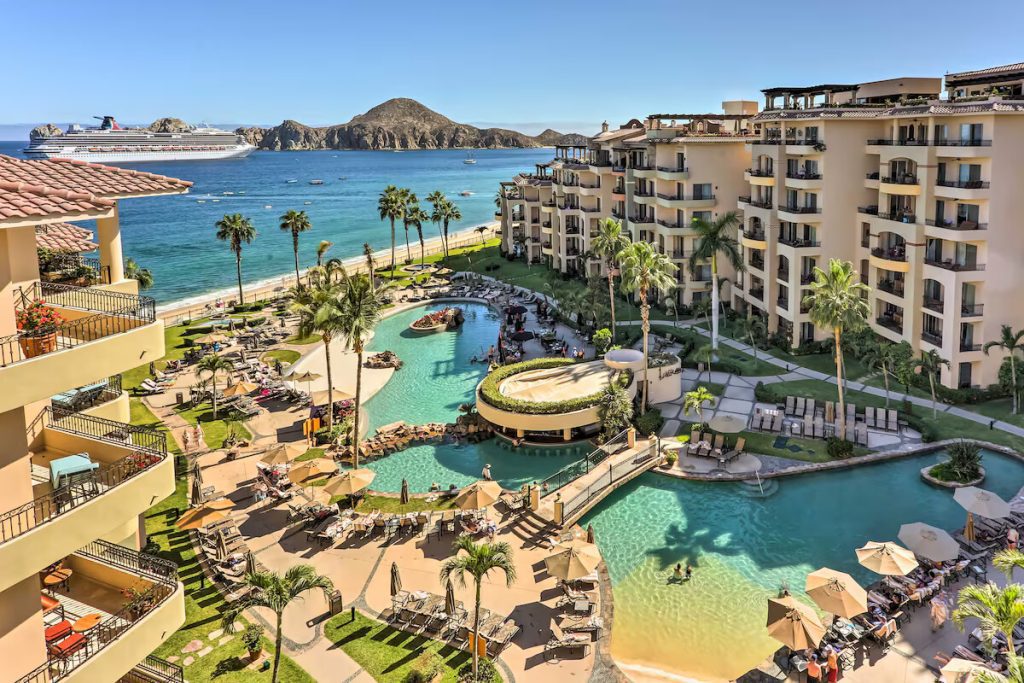
- The nightlife at Cabo Wabo and the marina strip maintains its energy because Mexican domestic visitors and budget-conscious international travelers keep the town from emptying entirely

The Mifel Tennis Open (ATP 250) takes place at the Cabo Sports Complex in the Tourist Corridor in late July and early August, drawing approximately 30,000 fans over the week. If tennis interests you, this is the only window that you can enjoy this event.
Marlin fishing reaches peak abundance from July through November, which is why serious sport fishing groups accept the weather trade-off and book low season deliberately.
Sea turtle nesting happens on Cabo’s beaches from late August through October. Five species of endangered sea turtles, including loggerheads and olive ridleys, nest along the Baja coast during this window. It’s a remarkable natural event that most travelers miss entirely because they’re focused on peak season beach conditions.
Best Time to Visit Cabo for Whale Watching: Season Dates and Where to Go
Whale watching is one of the strongest seasonal draws in Los Cabos, and understanding the two distinct whale species and their windows helps in timing a trip around it.
Humpback whales migrate from their northern feeding grounds to Cabo’s warm waters from mid-December through mid-April, with January and February representing the densest population presence. They’re the species most associated with Cabo whale watching because they’re large, active, and visible from boat tours departing the marina.
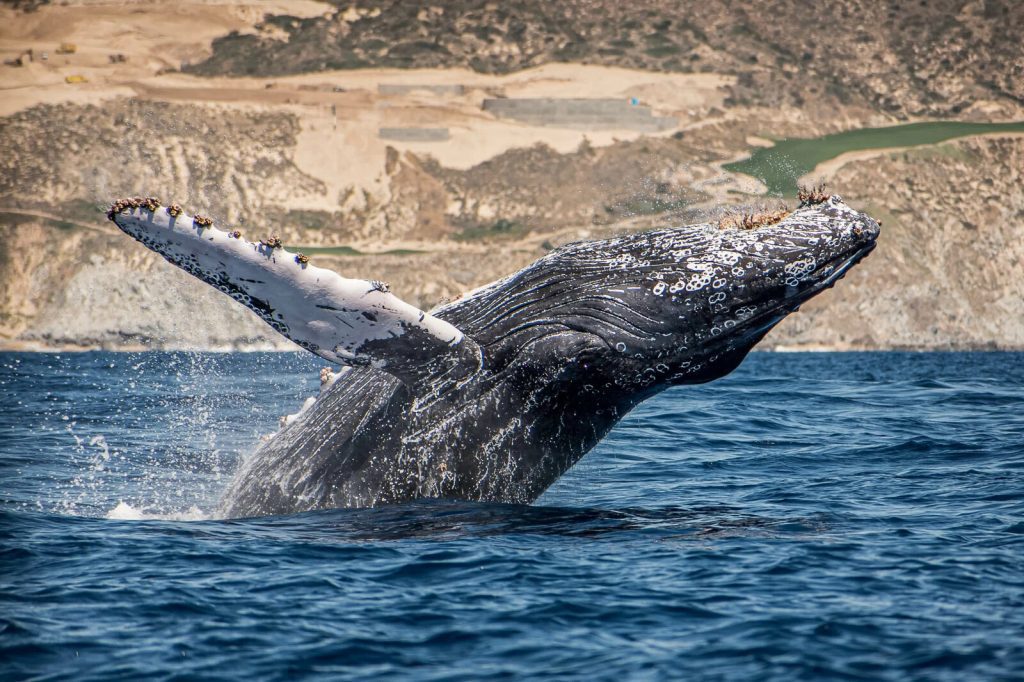
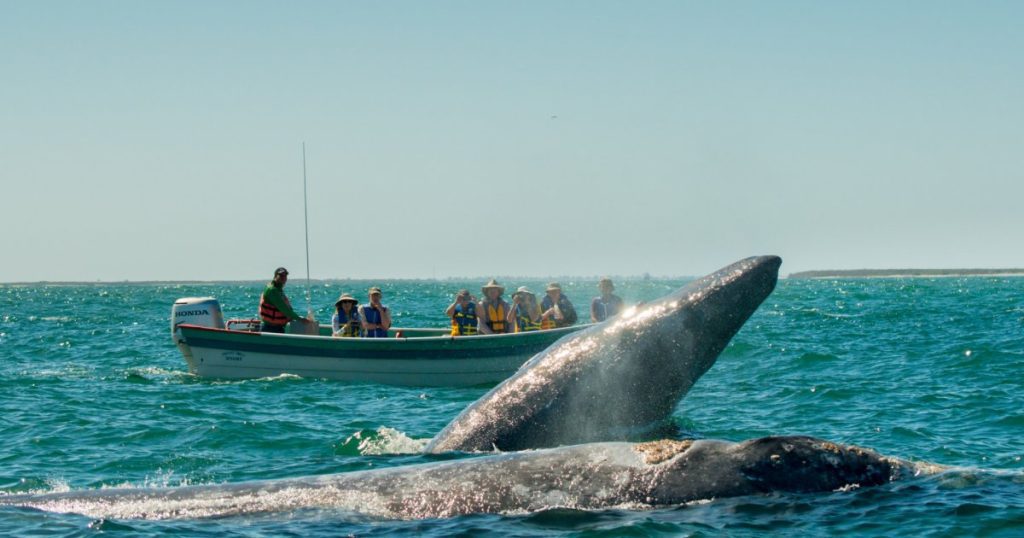
Gray whales don’t come to Cabo itself, but are best seen at Magdalena Bay, a lagoon 3-4 hours north of Los Cabos, from February through mid-March.
The February-March overlap window is the only time both humpbacks are active in Cabo waters and gray whales are accessible via day trip to Magdalena Bay simultaneously.
Whale watching tours operate from the Cabo San Lucas marina, typically running 3 hours and cost anywhere between $93-120 or more per person. They fill fast in January and February. Booking through a hotel concierge or verified local operator at least several days in advance is standard practice in peak whale season.
The best time to visit Cabo San Lucas for whale watching, stripped of all caveats is January and February. The weather is ideal, the humpback population is at its largest, and the combination of whale watching, El Arco water taxi rides, and quality dining at this time of year is the full Los Cabos package.
Cabo San Lucas Hurricane Season
The Cabo San Lucas hurricane season runs from June 1 through November 30, aligning with the broader Pacific hurricane season. This is accurate and worth taking seriously, but the geography of Los Cabos provides context that most travelers don’t have.
Cabo San Lucas sits at the tip of the Baja California Peninsula, which is separated from mainland Mexico by the Gulf of California. The peninsula’s position and the cooler upwelling waters on its Pacific side mean that most tropical systems weaken before reaching the tip of Baja.
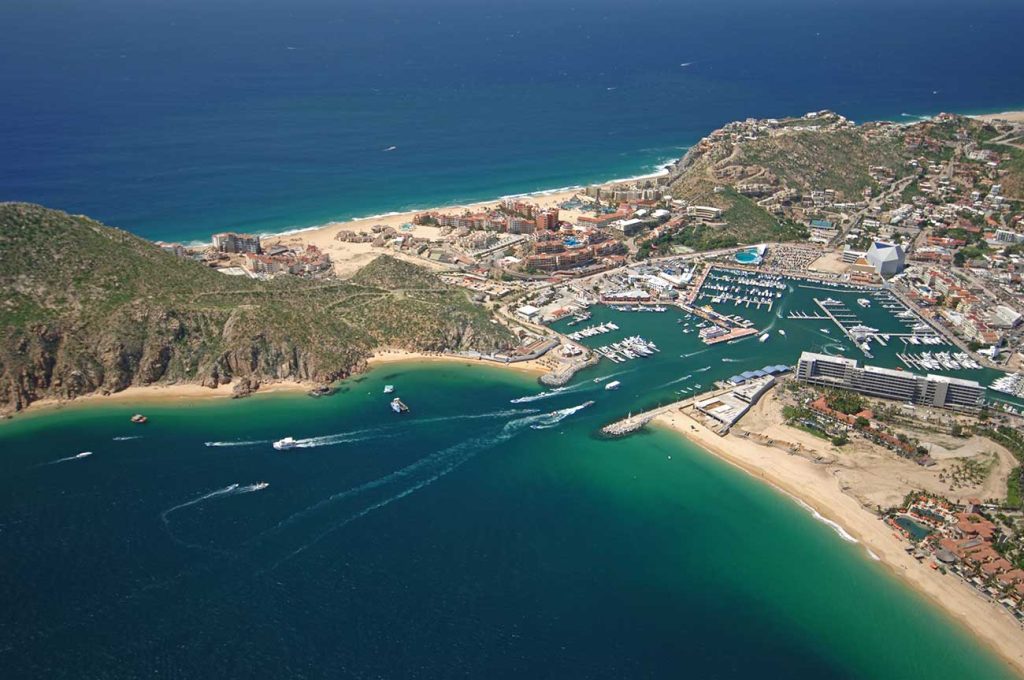
Direct hurricane landfalls at Los Cabos are uncommon, though not unheard of — Hurricane Odile made direct landfall at Cabo in September 2014 and caused significant damage. Hurricane Rosa in 2018 and several systems in 2023 generated warnings and disruptions without making direct landfall.
Be Mindful of September & October
These months carry the highest realistic risk of hurricanes.
September is statistically the most active month for Pacific tropical systems, and the local tourism infrastructure reflects this as some restaurants reduce hours, some tour operators limit departures during active weather periods, and hotel rates drop to their lowest points of the year in part because demand drops alongside the perceived risk.
Practical Guidance for Travelers
- Purchasing travel insurance that covers trip interruption and cancellation is strongly recommended for any trip booked during June through November.
- Monitoring the National Hurricane Center forecast in the days before departure is standard practice for experienced Cabo travelers during this window.
- For most travelers, September is the only month where the combination of heat, humidity, and storm risk makes it genuinely difficult to recommend without reservation.
- October is a different story. While technically within the Cabo San Lucas hurricane season, October typically sees improving conditions from the third week onward.

The Bisbee’s Black and Blue Marlin Tournament, the largest sportfishing event in the world with a purse exceeding $11.5 million, is held October 23-27 in Cabo San Lucas. The weigh-ins at the Puerto Paraíso Mall waterfront are free to watch and are one of the most energetic events on the Los Cabos annual calendar.
Cheapest Time to Visit Cabo San Lucas
The cheapest time to visit Cabo San Lucas is September, with August a close second.
Luxury rental villas that run $800-1,200/night during January peak can be found for $350-500 in August and even lower in September, representing the sharpest discount of any month. The trade-off is the heat, the humidity, and the storm risk.
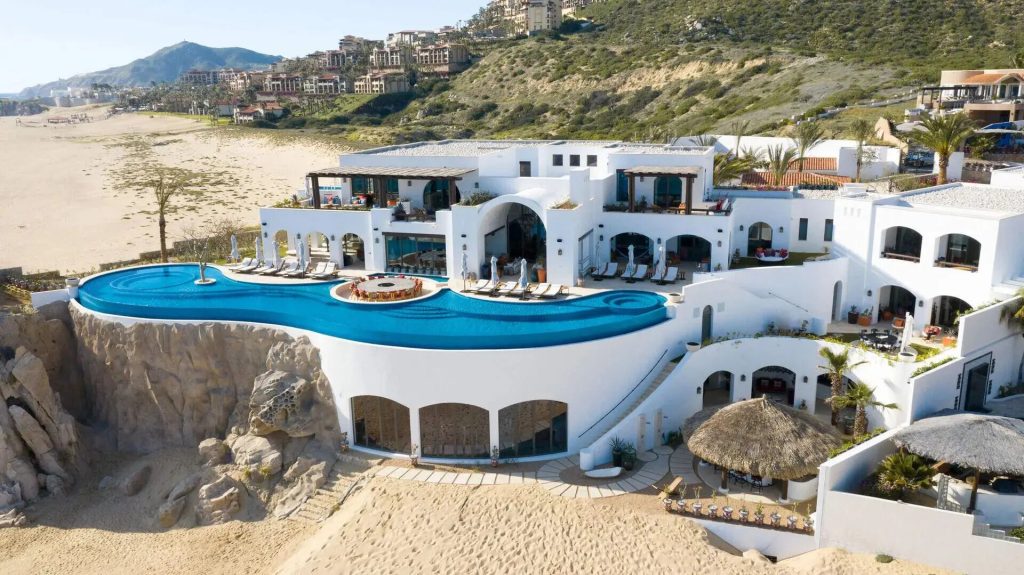
The cheapest time to visit Cabo San Lucas for a luxury villa rental that still delivers a functional beach vacation is the window from August 1 through September 15, if you’re comfortable with heat, occasional afternoon storms, and monitoring weather forecasts.
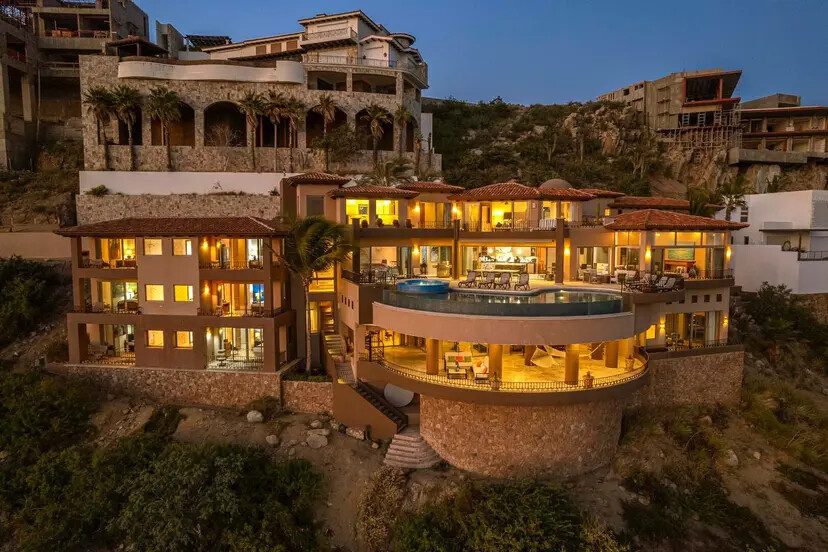
For travelers who want savings without that risk, early November is the most underrated value month in the year because it’s dry, fairly comfortable, and priced 15-25% below what December commands.
Booking lead times matter significantly in the best time to visit Cabo San Lucas calculation.
- Peak season (December-April) requires booking luxury properties 3-5 months in advance for Christmas and New Year’s weeks, and 2-3 months out for January and February.
- Spring break (mid-March) should be booked by November for the best available inventory.
- Shoulder season requires 4-6 weeks minimum for quality properties.
- Low season is flexible, though September bookings sometimes require extra confirmation as operators occasionally consolidate availability around active weather periods.






Major Events Calendar: What’s Happening When
| Event | Timing | What It Means for Your Trip |
| Humpback whale season | Mid-December through mid-April | Daily marina tours; book in advance |
| San José del Cabo Art Walk | Thursdays, November-June | Gallery District open until 9 p.m. weekly |
| Fiesta de San José | March 19 | Street festival in San José del Cabo |
| Semana Santa (Holy Week) | Week before Easter | Peak crowds; prices surge |
| Cinco de Mayo | May 5 | Low-key in Cabo; celebrated more in mainland Mexico |
| Mifel Tennis Open (ATP 250) | Late July-early August | 30,000+ fans; Cabo Sports Complex in the Corridor |
| Mexican Independence Day | September 15-16 | Parades and fireworks in downtown San José |
| Bisbee’s Los Cabos Offshore | Mid-October | Marina weigh-in free to watch |
| Bisbee’s Black and Blue | October 23-27, 2026 | Largest sportfishing tournament in the world; $11.5M+ purse |
| Day of the Dead | November 1-2 | Altar displays and Art Walk celebrations in San José |
| Thanksgiving Weekend | Late November | Prices begin peak season climb |
| Christmas and New Year’s | Dec 24-Jan 1 | Highest prices of year; restaurants booked weeks out |
Frequently Asked Questions
What is the best time to visit Cabo San Lucas?
The best time to visit Cabo San Lucas for most travelers is November through April, when the weather is dry and sunny with average highs between 77°F and 85°F and virtually no rain. January and February are the peak whale watching months with the most humpback activity in the bay. For value, May, June, October, and early November offer 20-30% savings off peak pricing with still-excellent conditions.
What is the cheapest time to visit Cabo San Lucas?
September offers the lowest prices of the year, with luxury rental rates sometimes 40-50% below peak season. August is the second-cheapest month. Both months fall within hurricane season and deliver significant heat and humidity. For travelers who want savings without storm risk, May and early November offer 20-30% discounts from peak pricing with reliably good weather.
What months are hurricane season in Cabo San Lucas?
The Pacific hurricane season in Cabo San Lucas runs officially June 1 through November 30, with September carrying the highest statistical risk. Direct hurricane landfalls at Los Cabos are uncommon due to the peninsula’s geography, but the 2014 Hurricane Odile caused major damage when it made direct landfall at Cabo. Travel insurance is strongly recommended for any trip booked June through November, and monitoring the National Hurricane Center forecast before departure is standard practice.
When is the best time to visit Cabo for whale watching?
January and February are the peak months for humpback whale watching in Cabo San Lucas. Humpbacks are present from mid-December through mid-April, with the largest population in January and February. For gray whale watching, February and March require a 3-4 hour day trip north to Magdalena Bay. Whale watching tours depart the Cabo marina daily during peak season and cost approximately $93-120+ per person for a 3-hour tour.
What is the weather like in Cabo San Lucas in December?
December in Cabo San Lucas brings dry, sunny conditions with average highs around 79°F and lows around 62°F. Rainfall is near zero. It’s the start of whale watching season and one of the most popular months of the year, with holiday pricing and crowds to match. Book any luxury rental or popular restaurant reservation well in advance — December is peak season from mid-month through the New Year.
Is Cabo San Lucas crowded in March?
March is one of the most crowded months in Cabo San Lucas due to spring break, which typically runs through most of the month for North American universities and schools. Prices are at or near their annual peak, beach clubs fill by mid-morning, and restaurant reservations at popular spots should be booked several weeks in advance. The final weeks of whale watching season also overlap with spring break, making whale tours a competitive book.
Is August a good time to visit Cabo San Lucas?
August is a viable time to visit if budget is the priority and heat and humidity are acceptable. Temperatures reach the mid-90s°F with rising humidity, afternoon thunderstorms are common but typically brief, and storm risk is elevated. The trade-off is some of the year’s lowest rental rates, quiet beaches, active nightlife, and peak sport fishing for marlin. Sea turtle nesting begins in late August on Baja’s beaches.
When should I book a vacation rental in Cabo San Lucas?
For peak season (December through April), book 3-5 months in advance for Christmas and New Year’s weeks, and 2-3 months out for January and February. Spring break (mid-March) should be secured by November for the best property selection. Shoulder season (May, June, October, November) requires 4-6 weeks minimum for quality inventory. Low season (July-September) has more flexibility, though September bookings sometimes require weather monitoring and flexibility.