
Is Costa Rica safe for tourists?
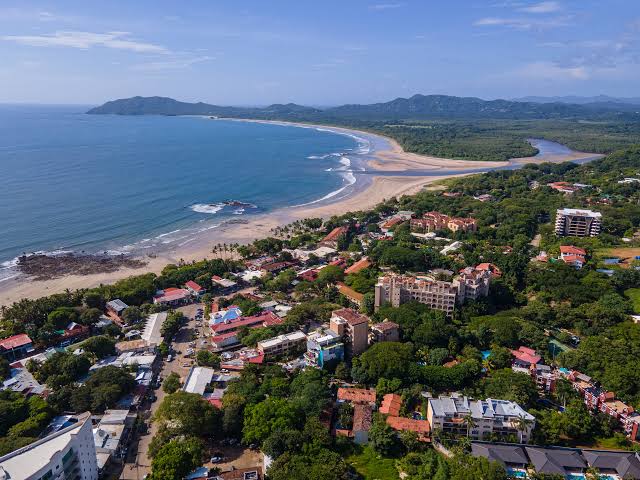
Yes, Costa Rica is safe for tourists, and it remains the most consistently safe country in mainland Central America. The U.S. State Department places it at a Level 2 advisory (“Exercise Increased Caution”), the same rating given to France, Italy, and Germany. But “safe” in Costa Rica comes with real texture: the risk that actually affects visitors is overwhelmingly petty theft and rental car break-ins, not violent crime, and the safety picture shifts depending on which region you’re in.
This guide walks through what’s true in 2026, region by region, so you can plan with clear eyes.
At a Glance: Is Costa Rica Safe for Tourists?
| Safety Factor | Risk Level | What to Know |
| Violent crime against tourists | Low | Rare; mostly concentrated in specific San José neighborhoods after dark |
| Petty theft (beach, rental car) | Moderate–High | The single most common incident type tourists experience |
| Scams | Moderate | Overcharging, fake parking attendants, distraction theft |
| Driving / road conditions | Moderate | Potholes, river crossings, rainy-season landslides |
| Drug-related crime | Low for tourists | Increase in homicides is almost entirely trafficking-related, not visitor-directed |
| Swimming / ocean safety | Moderate | Rip currents at several Pacific beaches; always check conditions |
| Water and food safety | Low | Tap water is treated in all major tourist zones |
| U.S. State Dept. Advisory | Level 2 | “Exercise Increased Caution” — same as France, Italy, Germany |
Why Costa Rica’s Safety Reputation Holds Up, With Caveats
Costa Rica has no standing army, a stable democracy, and consistently the highest Global Peace Index ranking of any mainland Central American nation — 54th globally in the 2025 index, climbing to 39th in 2026. Over 1.6 million Americans visit annually, and the overwhelming majority have safe trips.
It’s also worth being straight about the harder data. Costa Rica recorded its highest-ever homicide rate in 2023, and 2026 brought a few high-profile cases involving foreign nationals that made international headlines.
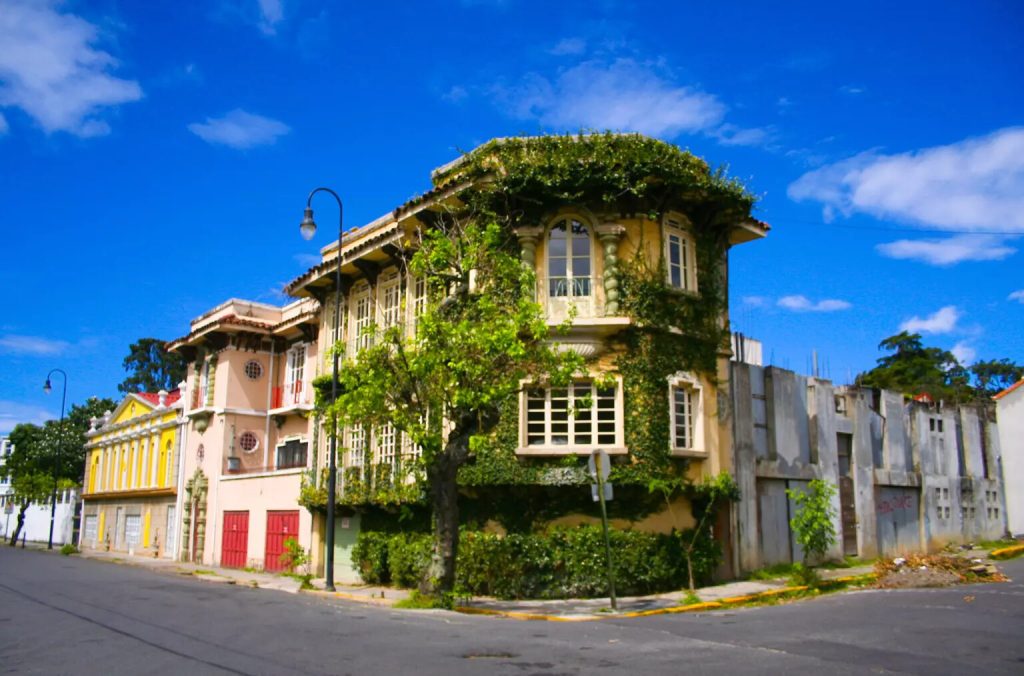
But, the honest context matters here: Costa Rican authorities and U.S. consular reports consistently describe the increase as concentrated among people involved in drug trafficking disputes, in port-city neighborhoods that are not on typical tourist itineraries.
The risk profile for a typical traveler staying in Guanacaste, Manuel Antonio, Arenal, or Monteverde looks nothing like the risk profile in a trafficking-affected neighborhood of Limón or parts of San José. That distinction is the most useful thing to understand before your trip.
Is Costa Rica Safe to Drive In?
This deserves its own section because driving conditions are the most common practical safety question for first-timers, and most safety guides underplay it. The main highways connecting San José, Liberia, and the major tourist circuits are paved and well-maintained.
However, once you turn off them, conditions quickly change and many secondary and rural roads are dirt, poorly marked, and full of potholes that locals casually call a “different level” from what most American drivers expect.
Take Caution in Rainy Season
May through November adds real complexity.
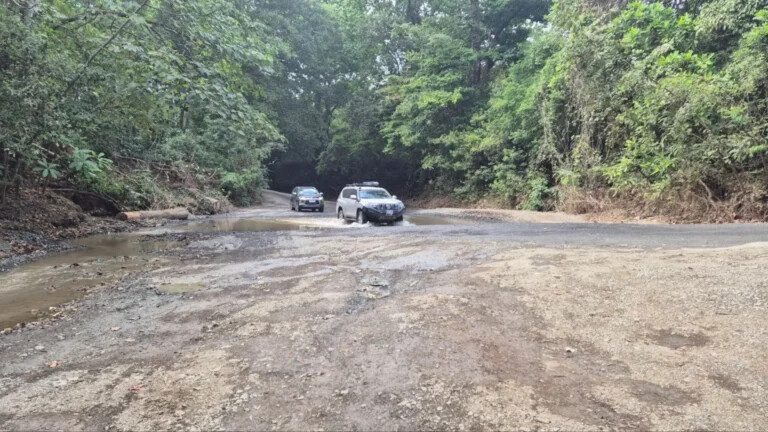
River crossings that are a non-issue in dry season can become impassable or dangerous after a few hours of heavy rain, and rental car insurance in Costa Rica does not cover water damage under any circumstances, even on routes explicitly marketed for it, like the popular Route 911 “Monkey Trail” with its two river crossings.
If a crossing looks high or fast, the right move is to turn around, not push through.
A Few Practical Specifics
- Monteverde’s access roads require a high-clearance vehicle regardless of season because of the terrain, and most rental companies recommend a 4×4 there in the rainy season if you’re staying outside the town center.
- Nosara’s roads are unpaved and turn to deep mud in the rainy season, so a 4×4 there isn’t optional.
- Puerto Viejo on the Caribbean side, by contrast, has paved roads and doesn’t require a 4×4 at all. Expect to budget $25–$50/day for a standard rental car and $80+/day for a 4×4 or SUV, with lower rates for longer bookings made in advance.
- There have been documented reports of staged incidents near Juan Santamaría International Airport (SJO) in San José, including people throwing objects at cars to get drivers to pull over before robbing them. If anything like this happens, the standard advice is to keep driving to a well-lit, populated area before stopping. Do not pull over immediately on an isolated stretch of road.



The Safest Places to Stay in Costa Rica, Region by Region
This is where a region-by-region view matters more than a single national safety score. Here’s how the country’s main tourist circuits compare:
| Region | Safety Profile | Most Common Issue |
| Guanacaste (Tamarindo, Nosara, Playa Conchal, Flamingo, Papagayo) | Low risk; most popular region for U.S. visitors | Rental car break-ins at beach parking areas |
| Manuel Antonio & Quepos | One of the lowest-risk tourist areas in the country | Theft from unattended beach belongings |
| Arenal / La Fortuna | Low risk; family-friendly, rural tourism hub | Petty theft on isolated trails |
| Monteverde | Low risk; small, community-feel cloud forest town | Minimal — mostly a logistics/driving challenge, not crime |
| Central Valley / San José | Mixed — depends heavily on specific neighborhood | Downtown areas, bus terminals, and certain neighborhoods (Los Guido, parts of Barrio Cristo Rey) after dark |
| Caribbean coast (Puerto Viejo, Limón) | More variable; Limón city itself carries higher risk | Urban port-area crime concentrated in non-tourist zones |
Guanacaste
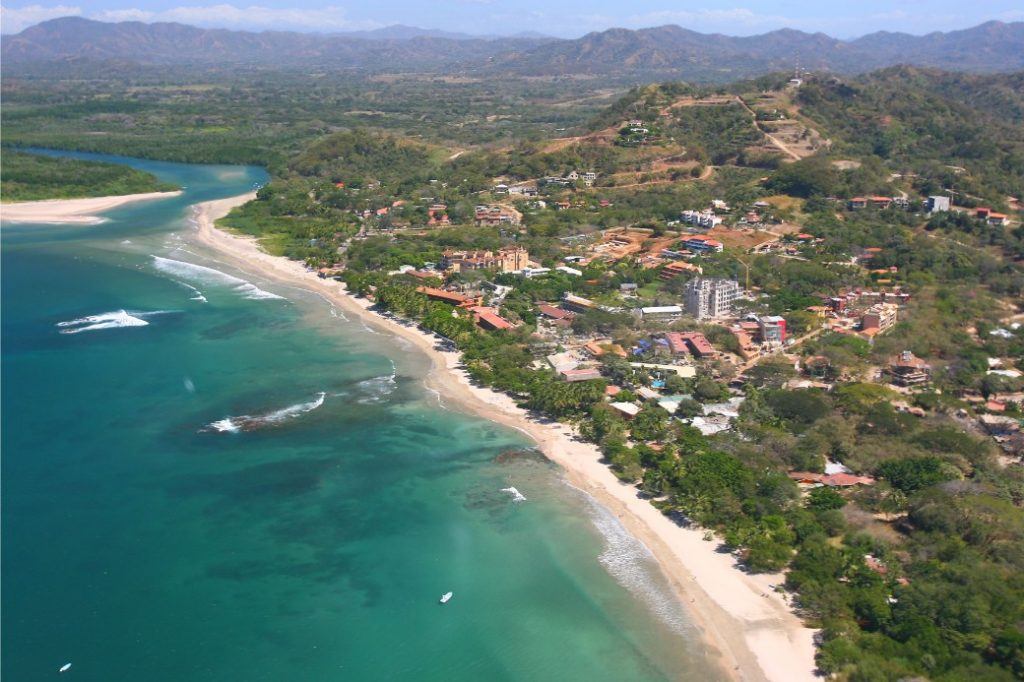
This is the most straightforward region for first-time visitors and the most popular with American tourists. Tamarindo, Nosara, Playa Conchal, and the Papagayo Peninsula are all structured around tourism, with the most common real-world issue being break-ins at beach parking lots rather than anything more serious. The fix is simple and consistent across every credible source: never leave anything visible in a parked car, and use designated, attended parking where it exists.



Manuel Antonia & Quepos
This region consistently ranks as one of the lowest-risk tourist destinations in the country. The town is small, walkable, and busy with international visitors year-round, and Manuel Antonio National Park is well-staffed during operating hours. The biggest risk here is theft from beach blankets while swimmers are in the water — violent crime is not a concern. Quepos, just north of Manuel Antonio, tends to have more affordable accommodations and is a similarly low-risk base; the road connecting the two is busy enough with shuttles and taxis that walking it in daylight is considered safe.



Arenal & La Fortuna
Arenal and La Fortuna carry a rural, family-friendly safety profile, with most concerns limited to opportunistic petty theft rather than anything violent. The area has a sizable American expat community, which tends to correlate with strong tourist infrastructure and community.



Monteverde
Monteverde is small, quiet, and consistently described as low-crime, popular with eco-tourists. The main practical challenge here isn’t crime, but the access roads, which genuinely require a high-clearance vehicle.



San José & the Central Valley
This area requires more specific awareness than the beach and rainforest regions. Daytime visits to most of the capital are fine, but downtown areas, particularly around the Coca-Cola bus terminal, parts of Parque Central, and certain residential neighborhoods like Los Guido and parts of Barrio Cristo Rey, should be avoided after dark or navigated with an official red taxi or verified rideshare rather than on foot. Most travelers pass through San José briefly en route to other regions rather than basing a trip there.


Jacó
It’s the closest beach town to San José and a legitimate surf destination, but it’s also known for an intense nightlife scene and is one of the more frequently mentioned spots for nighttime drug solicitation on the beach. If approached, the standard advice is to decline politely and keep walking. For first-timers prioritizing a quieter, lower-hassle trip, Manuel Antonio, the Guanacaste beach strip, or Nosara generally deliver more of what people come to Costa Rica for.



Is Costa Rica Safe for Solo Female Travelers?
Generally, yes. Costa Rica is consistently regarded as one of the more comfortable Central American countries for solo women, and it sees a substantial volume of solo female visitors every year without it being a notable outlier in incident reports. The standard precautions that apply broadly to international solo travel apply here too:
- Avoid walking alone at night in unfamiliar areas.
- Use registered taxis or rideshare apps (Uber operates legally across most Costa Rican cities and tourist towns as of 2026) rather than informal transportation.
- Trust your instincts in nightlife settings.
The tourist hubs — Manuel Antonio, Tamarindo, Monteverde, La Fortuna — all have well-established infrastructure that solo travelers, including women traveling alone, navigate comfortably and frequently.
Common Costa Rica Tourist Scams and How to Avoid Them
The realistic risks for tourists in Costa Rica cluster around a short, predictable list:
- Rental car break-ins — The most frequently cited issue across every region, especially at beach parking areas in Guanacaste and the Central Pacific. Never leave anything visible in the car, even briefly, and use attended or hotel parking lots whenever one is available.
- Beach belongings theft — The second most common issue is bags, phones, and cameras being taken while owners are in the water. This is opportunistic, not coordinated, and entirely preventable by not bringing valuables to the beach or having one person stay with belongings.
- Distraction theft and overcharging — This shows up at crowded bus terminals, in San José’s downtown, and occasionally with informal “parking attendants” at popular trailheads or beach lots who aren’t affiliated with any official service. If someone offers unsolicited help watching your car for a tip, that’s worth a moment of skepticism.
- Drug solicitation on beaches at night — Particularly in nightlife-heavy towns like Jacó and Puerto Viejo, this is common enough to mention. Buying drugs is illegal, the transactions are not regulated in any way, and the situation can escalate quickly. A firm “no, gracias” and continuing to walk is the best advice.
None of this requires traveling on-edge the whole trip. Use some baseline awareness, don’t leave things unattended, use official transportation, and keep your passport in the room safe rather than carrying it around daily.
Practical Safety Tips for 2026
- Check your government’s current travel advisory before departure — Conditions are reassessed periodically, and Costa Rica’s Level 2 rating, while stable, is worth confirming close to your travel dates.
- Get a Costa Rica eSIM before you land — This makes navigation, ride-hailing, and emergency contacts work the moment you clear immigration, and it’s useful both for convenience and as a safety tool.
- Dial 911 for emergencies — It’s staffed 24/7 with English-speaking operators in tourist areas.
- Use official red taxis or a verified rideshare app — Avoid unmarked vehicles, especially at night or in San José.
- Never leave valuables visible in a parked rental car — This single habit prevents the most common tourist incidents in the entire country.
- Don’t leave bags unattended on the beach — This include while swimming.
- Keep passports in your accommodation’s safe — Don’t carry them around day-to-day; a photo or copy is usually sufficient for daily needs.
- Avoid river crossings in a rental car during heavy rain — Insurance will not cover water damage, and the danger is real.
- Travel insurance isn’t required to enter the country, but it’s worth having — Private medical care in tourist areas is good quality but not inexpensive without coverage.
- Drink tap water with confidence in major tourist zones — San José, Arenal, Monteverde, the Guanacaste beach towns, and the Nicoya Peninsula all have treated water; bottled or filtered is the safer call in more remote rural areas and parts of the Caribbean coast.
How Costa Rica Compares to Other Central American Destinations
| Destination | U.S. State Dept. Level | Notes |
| Costa Rica | Level 2 | Highest-ranked country in mainland Central America on the Global Peace Index |
| Mexico (national average) | Level 2 | More region-dependent; some states carry Level 3–4 advisories |
| Panama | Level 2 | Comparable advisory level; smaller tourist footprint |
| Belize | Level 2 | Comparable; smaller-scale tourism infrastructure |
| Nicaragua | Level 3 | Reconsider travel; political and civil unrest factors |
| Honduras | Level 3 | Reconsider travel; higher crime rates in urban centers |
| El Salvador | Level 2–3 (varies) | Improving in recent years but historically higher-risk |
Costa Rica’s tourism experience is also generally considered more straightforward than Mexico’s for a typical first-time visitor. There are fewer scam-heavy situations woven into the standard vacation flow, even though both countries carry the same headline advisory level.
Find Your Stay in Costa Rica






Frequently Asked Questions
Is Costa Rica safe for tourists right now in 2026?
Yes. Costa Rica carries a Level 2 U.S. State Department advisory which is the same rating as France, Italy and Germany, and remains the highest-ranked country in mainland Central America on the Global Peace Index. The biggest risks for tourists is petty theft, rental car break-ins, and beach belongings theft, not violent crime. Regional awareness matters: Guanacaste, Manuel Antonio, Arenal, and Monteverde are low-risk, while specific San José neighborhoods after dark warrant more caution.
What is the biggest safety risk for tourists in Costa Rica?
Petty theft, overwhelmingly. Rental car break-ins at beach parking lots and theft from unattended belongings on the beach account for the large majority of tourist-affecting incidents reported each year. Violent crime against visitors is documented but rare and concentrated in specific non-tourist neighborhoods, particularly parts of San José and Limón.
Is it safe to drive in Costa Rica?
Generally, yes. Main highways are paved and well-maintained, but secondary and rural roads can be rough, and the rainy season (May–November) brings flooding, landslides, and river crossings that rental insurance will not cover for water damage. A high-clearance vehicle or 4×4 is recommended for areas like Monteverde and Nosara, while paved-road destinations like Puerto Viejo don’t require one.
Is Costa Rica safe for solo female travelers?
Yes. Costa Rica is widely regarded as one of the more comfortable Central American countries for solo women, with a substantial volume of solo female visitors annually. Standard precautions apply: avoid walking alone at night in unfamiliar areas, use registered taxis or Uber rather than informal transportation, and trust your instincts in nightlife settings.
What are the safest places to stay in Costa Rica?
Manuel Antonio and Quepos, the Guanacaste beach towns (Tamarindo, Nosara, Playa Conchal, Flamingo), Arenal/La Fortuna, and Monteverde are consistently ranked as the lowest-risk regions for tourists. Each has well-established tourism infrastructure and a track record of low violent crime, with petty theft from cars or beaches being the primary realistic concern rather than anything more serious.
Is Jacó, Costa Rica safe?
Jacó is generally safe during the day and is a great surf destination, but it has a reputation for intense nightlife and is one of the more commonly cited spots for nighttime drug solicitation on the beach. First-time visitors prioritizing a quieter or lower-hassle trip often prefer Manuel Antonio, the Guanacaste beach strip, or Nosara instead.
Is tap water safe to drink in Costa Rica?
Yes, in major tourist areas. Tap water is treated and safe to drink in San José, Arenal, Monteverde, the Guanacaste beach towns, and the Nicoya Peninsula. In remote rural areas and parts of the Caribbean coast, bottled or filtered water is the more cautious choice.
Does Costa Rica require travel insurance?
No, travel insurance isn’t legally required to enter Costa Rica as of 2026, but it’s strongly recommended. Private medical care in tourist areas is generally good, but it isn’t cheap, and an uninsured emergency like a broken bone or severe allergic reaction can run into the thousands of dollars out of pocket.